mutteringhousewife

Adventures in cooking, travel and whatever else I feel like musing on

Day 20: Robin Hood’s Bay

Gosh we’ve passed a lot of things on this walk with Robin Hood’s name on it, and apparently none of them really have anything to do with him. And it appears the same goes for this bay. The grandly named Coastguard Museum, which is just a room with some informative signs in it and a couple of fossils, tells us that the place was referred to about five hundred years ago by a king whose stuff had been nicked as a place where smuggled goods came ashore, namely Robin Oode’s Bay which they interpret as meaning the bay of Robin Goodfellow, the legendary Puck in Midsummer Night’s Dream.

The town is in two bits. The civilised bit up the top where we stayed at the Victoria Hotel, which is neatly ordered along the cliff top and dates from the Victorian era. And the old section which is jumbled together down the side of the cliff and is infinitely more picturesque. It seems to be quite the holiday spot, with many of the extremely irregularly shaped houses having holiday letting stickers in the window, and several of the tiny shops selling plastic shovels and swimming gear. But I cannot imagine the appeal of going in the water at any point along the coast. Maybe on a sunny day?
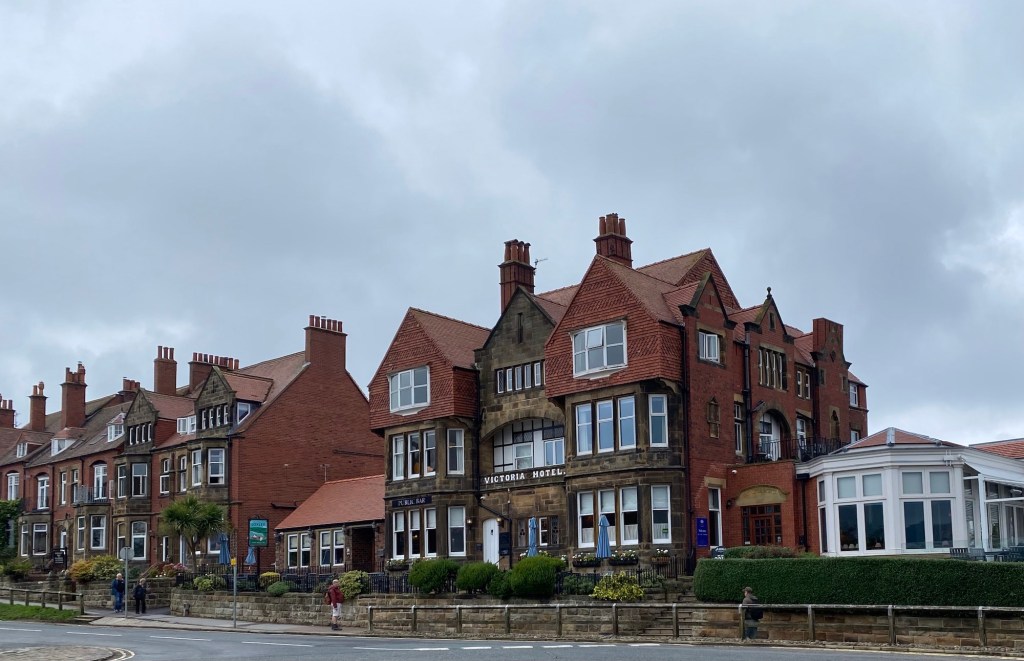
We had a little wander around the tiny alleyways of the old village, wondering how on earth you’d move a piano into one of these places, with knees protesting that they thought they were done with stairs. It was very cute indeed, but I thought there’d be more Coast to Coast merch for one, and I’d have loved to have learned more about the history of the place – but the village museum was only open some very odd hours a couple of days a week. The guidebook suggested you could easily spend a day here, but we were done in a couple of hours.

So back to the rather fancy hotel to gather our belongings and face the fact that this time it was up to us to move our big bags – there had been a service moving them between our B&Bs along the trip. I had a last look at my boots, and realise that they had walked their last walk. The tread was gone, the caps were separating from the uppers, there were gaps appearing around the edges, and they stank of bog. They are now in a bin somewhere in Robin Hood’s Bay, and I’m sure they’re not the only ones.

So onto a bus to Scarborough and a couple of trains back to London. You go past a lot of farmland on the train back to London, and I’ll never look at it the same way again. I know that those wooden signposts say Public Footpaths or Bridleway. I know how to get over a stile. I know the path will skirt around a field with a crop in it. I know that the sheep will skitter out of the way as you walk past them. I know what kind of plants grow in the strips of nature between the fields (but I don’t always know what they’re called – I do now recognise a stinging nettle).
I’ve got a few days in London left to have some small adventures before I need to get back to Zoom meetings and getting the washing machine fixed and circus and a much bigger sky. The Commander is staying on for a bit to enjoy the first extended bit of free time he’s had in forever. I might do another blog about what you might want to think about and what to expect if you do decide to attempt this marvellous walk yourself. When I’ve had some time to process it.

It really was a fine walk.

Day 19: Egton Bridge to Robin Hood’s Bay

Otherwise known as The Last Day of Walking. That’s right, we made it. I’m not going to say that the last day wasn’t tough, though. It wasn’t extremely tough, maybe just tough enough.

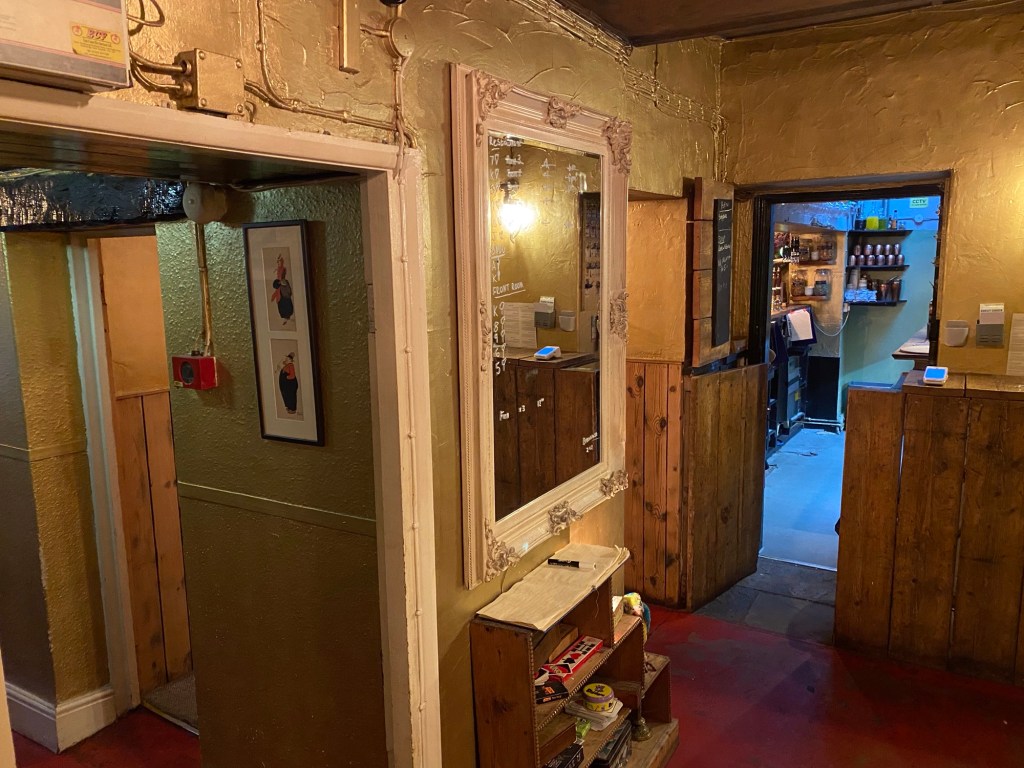
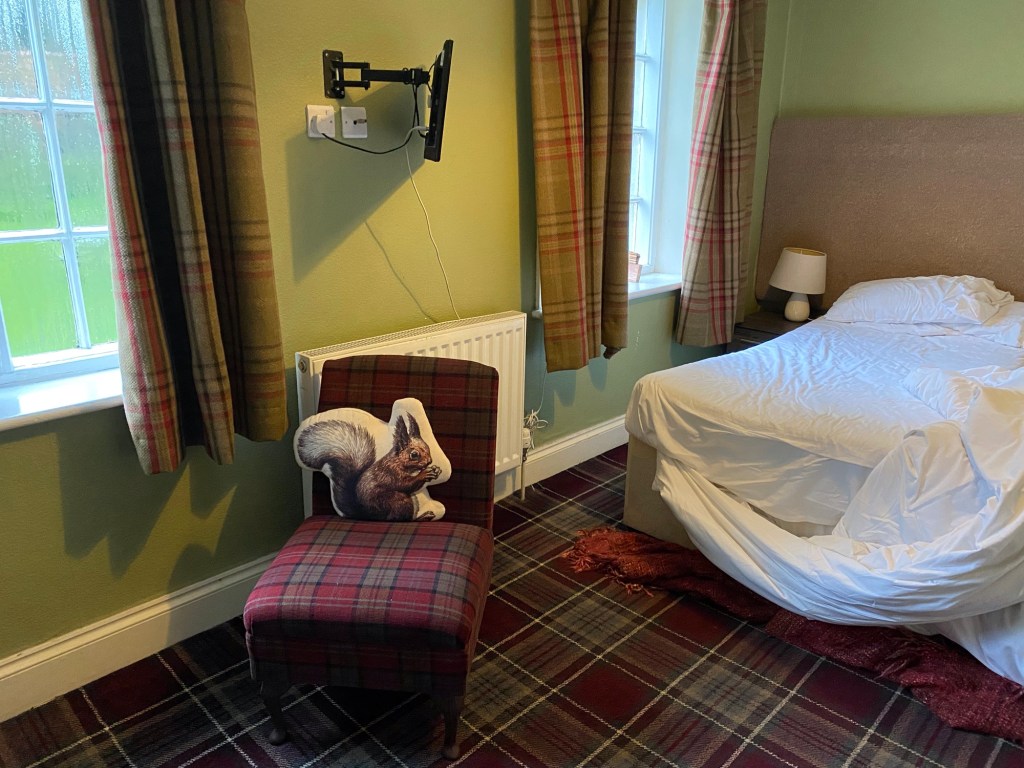
It started off well. The Horseshoe Pub pretty much epitomised the English country pub experience for me. I’ve mentioned the taxidermy and the multiple staircases going off at many different angles. There was also what looked like it would have been a very expensive Turkish carpet about a hundred years ago. Our room appeared to have been entirely upholstered in blankets, including blanket curtains in the bathroom, not shown here. Some of the walls were painted gold.

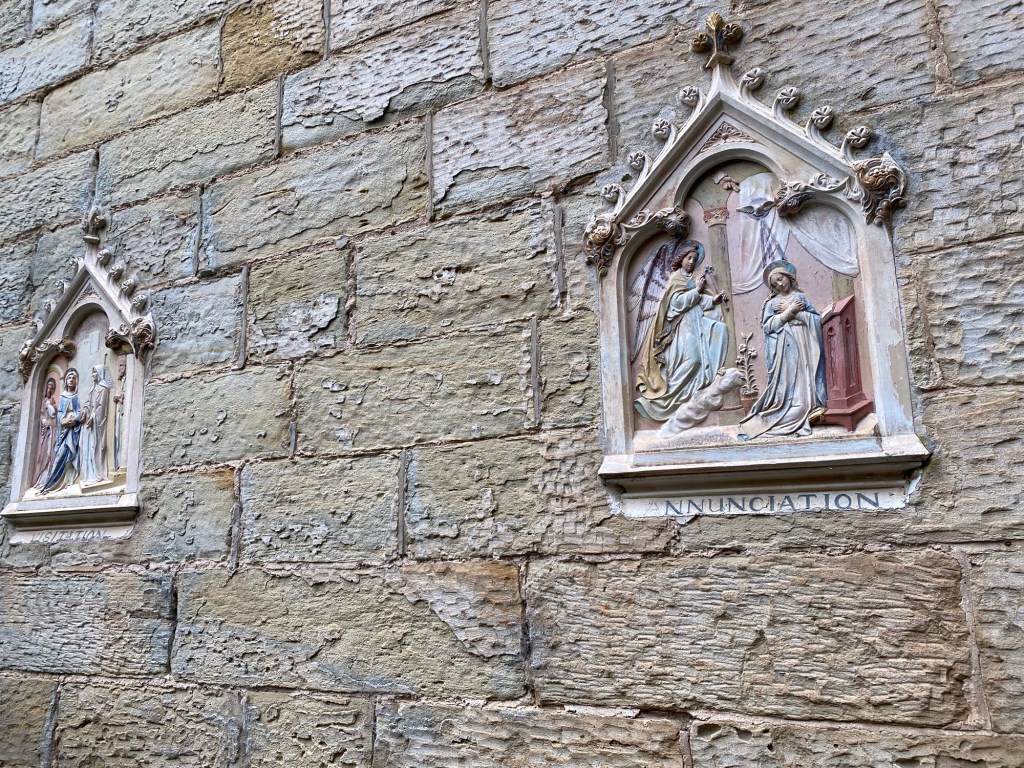
Egton Bridge had a little island in the middle of it, accessed by a picturesque set of stepping stones. And there was a lovely Catholic Church, St Hedda’s, although only a couple of hundred years old, not up to my usual standard.

And then as we left the village it started pouring with rain. We have a weather app, so we were attired in the full rain kit in preparation. It’s still a little dispiriting, and one is not inclined to take a lot of photos or to stop for any reason.

We climbed through the village of Grosmont which apparently has some picturesque steam engines stored near the train station which we didn’t bother with because a) rain and b) long way to go. Grosmont was built on a hillside with a gradient on average of 33% according to one of the road sign. And as we climbed out of the village into the moors we met our old friend, the fog.

We also picked up another American who had been following our bright orange daypack covers through the fog. She walked with us for the rest of the day. She had intended to do the walk in fourteen days, but due to a misunderstanding with her travel company was doing it in twelve with two travel days either end and she had not found it enjoyable. She appreciated the Commander’s navigational ability along the minor roads and tracks through the boggy moors the Coast to Coast took us along.

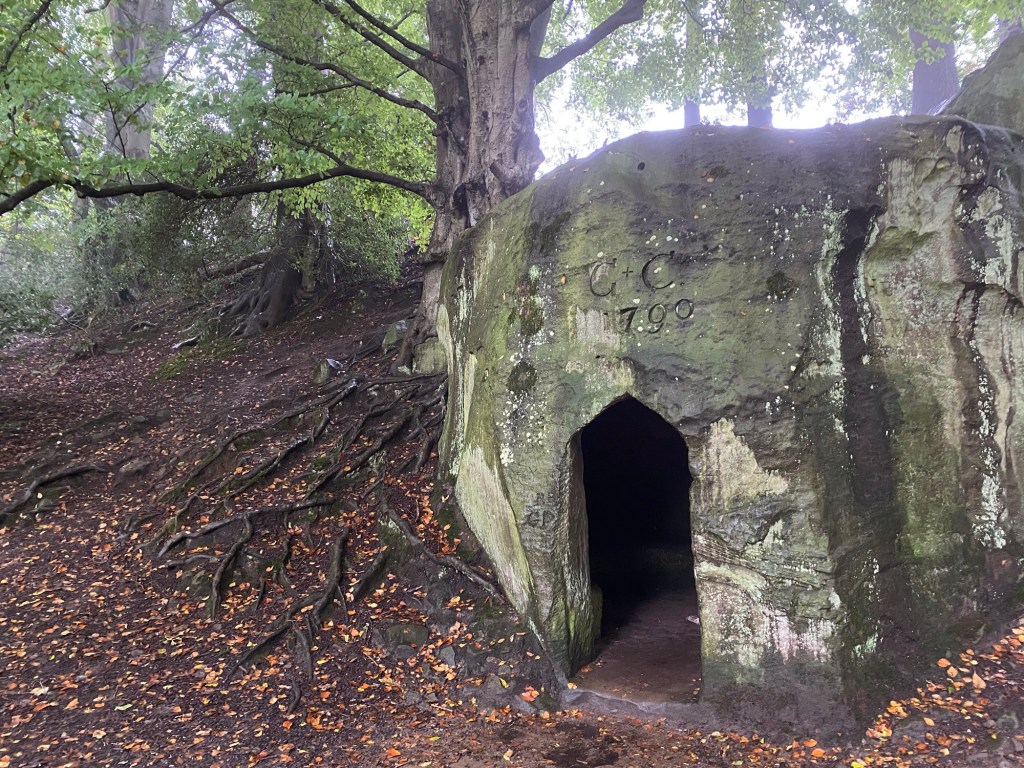
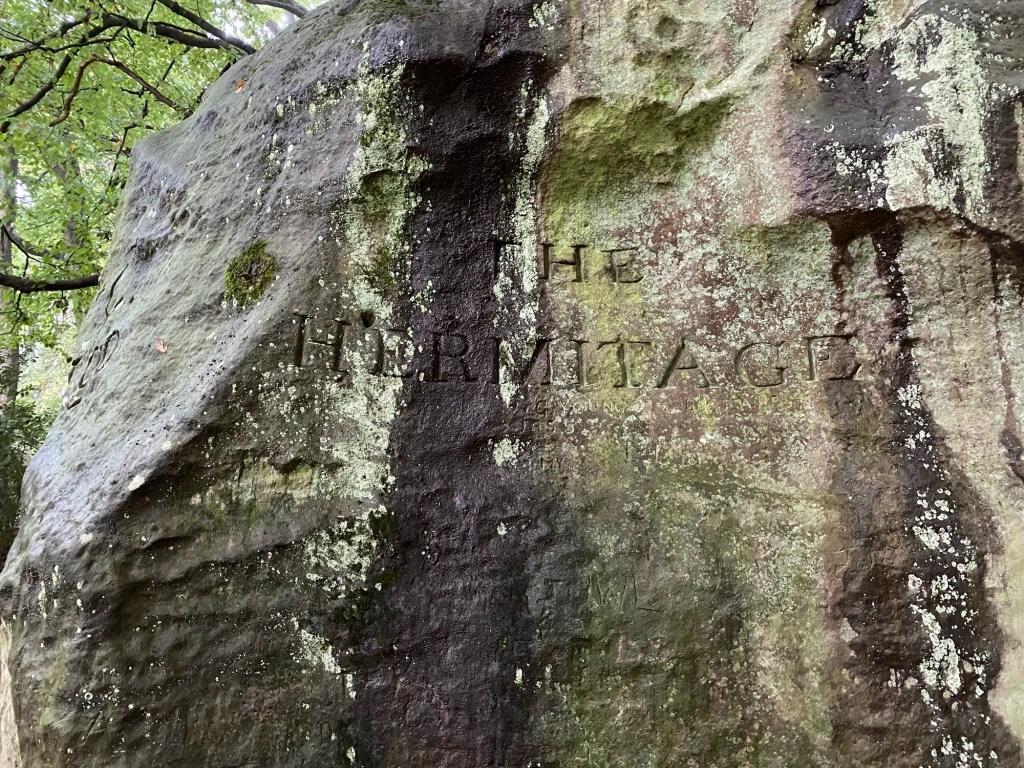
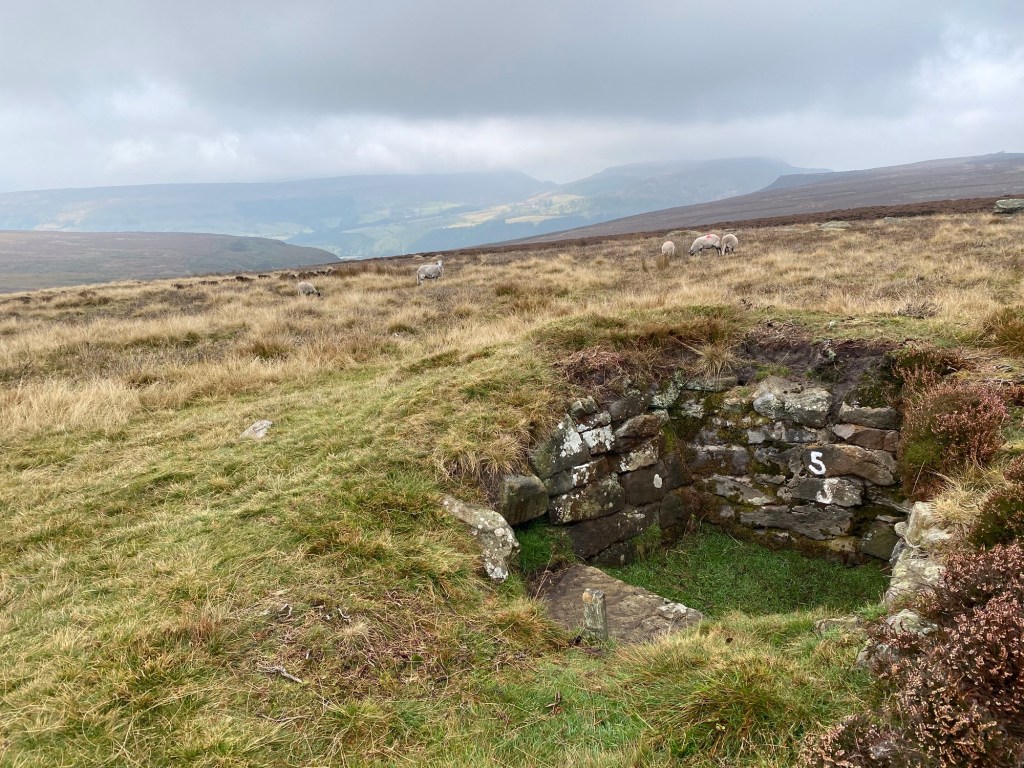
We dropped down into a misty forest where we came across a hollowed out stone that legend has it a hermit lived in in the 1700s. It was a little squeezy, but he had a lovely view.

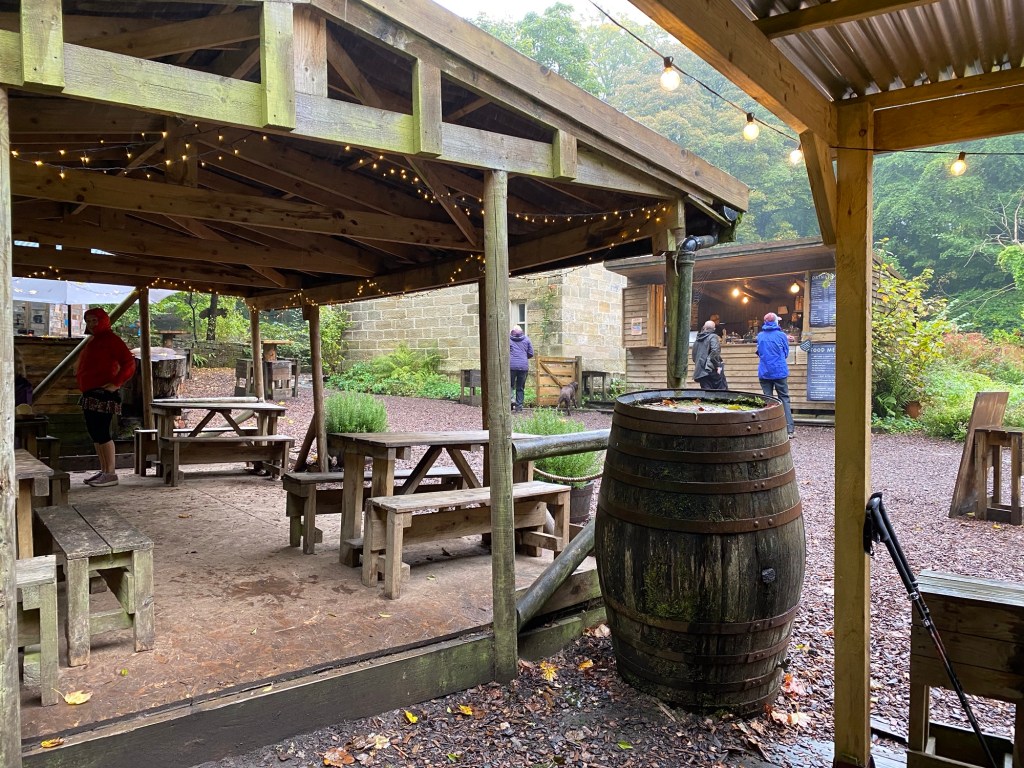
A little further along the track we came to the Falling Foss waterfall and an outdoor cafe alongside it. An indoor cafe with a roaring fire and mulled wine would have been slightly more welcome, but a clean toilet and a pretty good latte gave us energy if not dryness.

Falling Foss Cafe

There was a lot more walking through the moors in the fog and occasional rain, and we remembered our guide books telling us what great views we’d be getting of the North Sea by now. Knowledge that this was the last day kept our spirits high even though our socks were irredeemably wet.

When we started seeing seagulls and signs for holiday parks we knew we must be close to the coast. I actually took a photo of a particularly bleak looking holiday park with apparently no inhabitants to show my siblings to contrast it with the Crescent Head holiday cabins when we realised that the slightly different grey at the back of the photo was actually the North Sea.

As we walked down the path between the cabins the view of the sea became clearer. But the path terminated in a cliff, with a steep slippery stair winding down the side of it to a shelf of black rocks bordering the sea. So I’m not sure what the attractions are to any hardy souls staying in these cabins.

Wainwright designed this walk to terminate in a cliff walk like we’d started with at St Bees. The weather made it a very different experience, with the sea and occasional glimpses of where it met the land under the cliffs making the border between land and sea look perilous and forbidding.

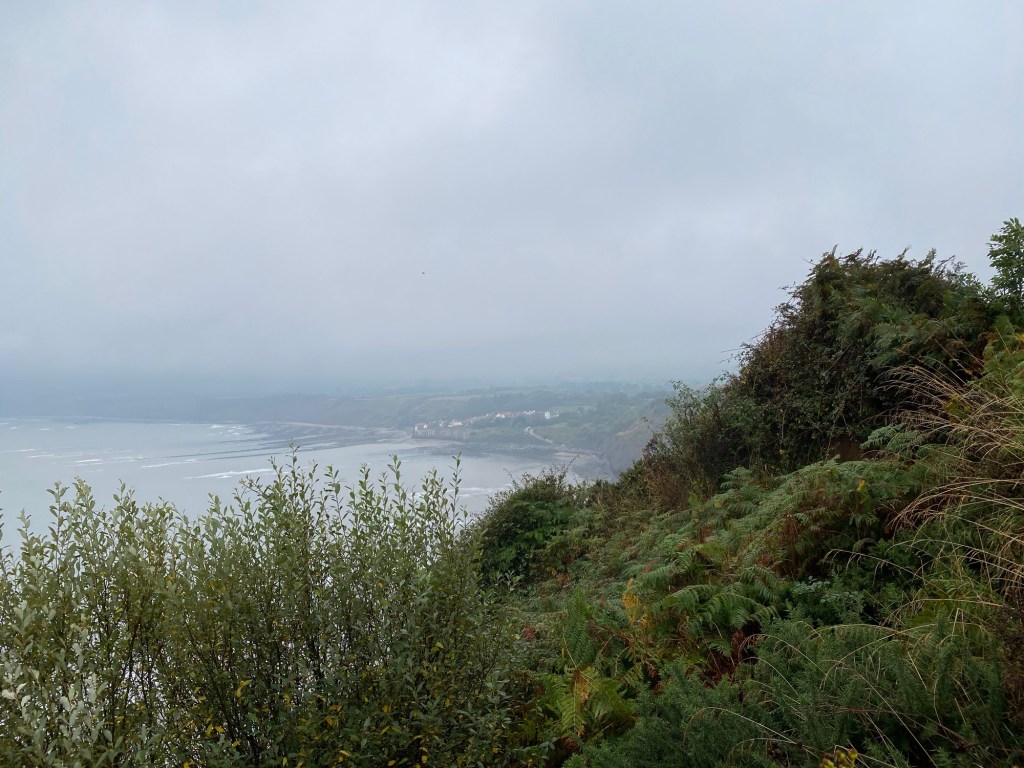
The walk along the cliffs was a bit over five kilometres, with a farewell to pastureland populated with cows and sheep, and the black slugs we’d seen on the paths since the beginning. The first glimpse of Robin Hood’s Bay was supposed to be a delightful surprise, but we could barely make it out through the mist.

Robin Hood’s Bay from the cliff walk

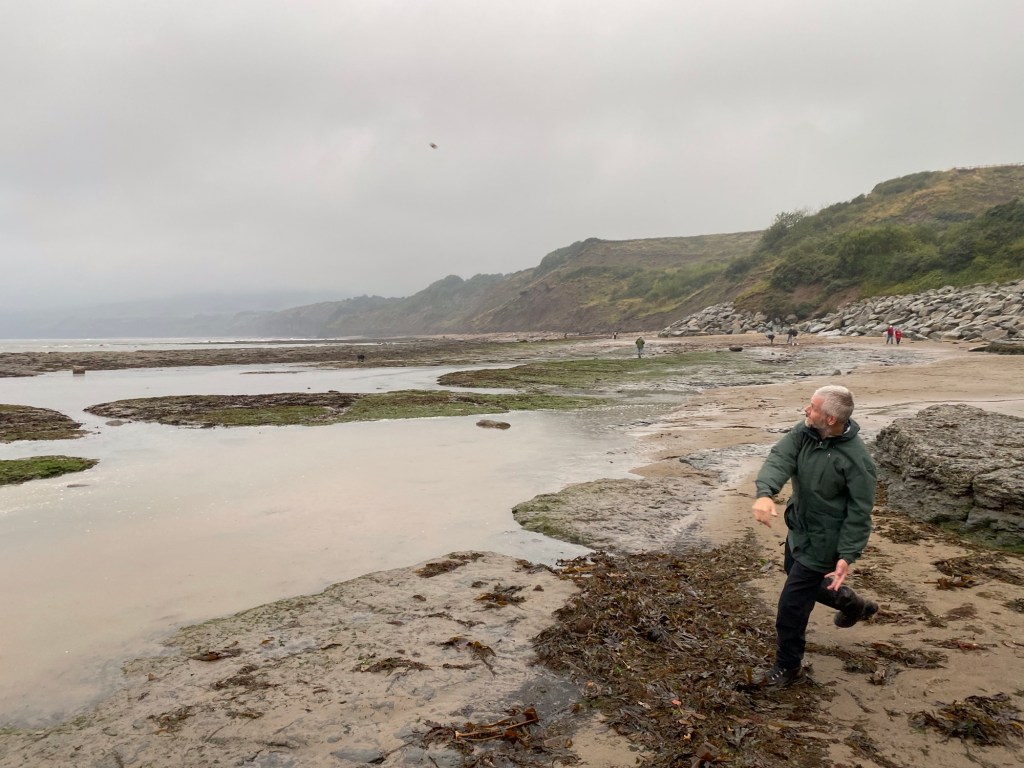
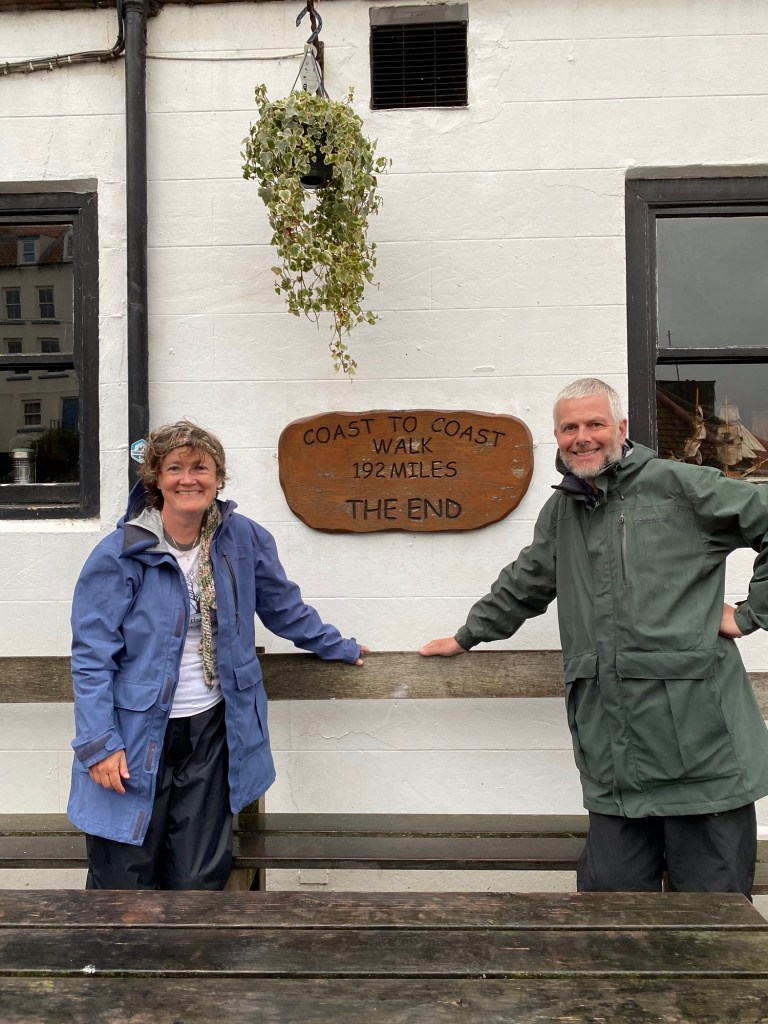
All good things must come to an end, and so our soaking wet boots took us down into the Victorian cliff top part of the town to check in to our accommodation, the Victoria Hotel. The trip wasn’t done yet though, we had to go down to the sea to cast in our pebble that we’d carried all the way from St Bees and dip our boots in the North Sea even though they probably didn’t need any additional moisture.

Then we had to go to the Wainwright bar for the obligatory photo, taken by an extremely footsore young man who had done the trip in eleven days carrying a full pack and wild camping. His feet were a sight to make a podiatrist clap their hands with anticipation.

And then upstairs to meet our friends the American doctors to drink a celebratory beer with them. Later, after a hot shower and getting out of the boots, we also had dinner with them and an unexpected trivia night where we scored 14 out of 25 correct with which we were extremely proud, but didn’t win any drink vouchers which was probably a good thing.

Our last walk, today, was a record 28 kilometres, but it certainly didn’t feel like my toughest day. I am looking askance at my boots, where the uppers appear to be starting to part ways with the soles and wondering if I could be bothered getting them back through Australian customs. But they’ve been through so much with me. I might make that call once they’ve dried out and smell less like bog.

Back to London tomorrow, and am planning to do a spot more reflecting on what has been a fantastic adventure that has given me quite ropy calves and a disdain for distances under ten kilometres. Not sure how long that will last.

Day 18: Blakey Ridge to Egton Bridge

It turns out we were not destined to get the full high moors experience with sweeping views of the valleys below. For today started out even more foggy than yesterday, which again means not as many photos. We knew that we had a pretty light day today, so didn’t tear ourselves away from the Lion until about ten (after buying T-shirts). I thought I might have to physically drag the Commander out as they’d just lit the fires as we were leaving and it was so deeply uninviting outside.

It wasn’t raining, but there was a fair bit of wind to whip the fog around. We couldn’t really be bothered putting on raincoats so just went with being slightly damp and collecting dewdrops on our facial hair. The track was mostly along the road (which had a decent verge for a change) or on very clear tracks. The small bit we did on a narrow track through the moor made us feel very isolated from the world indeed with such limited visibility.

We didn’t find the Young or Old Ralph stone, but we did manage to locate Fat Betty in the fog and continue the tradition of leaving a sweet and taking a sweet. There wasn’t a huge choice, someone had left a biscuit from the Lion. The Commander had a collection of biscuits from a range of establishments and left some wrapped chocolate chip biscuits, and took a weird orange mini chocolate wafer bar thing. Who starts these things.

Eventually we started to descend into Glaisdale, and the air got very gradually clearer as we went down, and there were sadly less grouse. I’ll miss the grouse, they’re such silly looking things. There were still sheep, though.

Glaisdale wasn’t much to look at (Wainwright didn’t think so either), but apparently was North Yorkshire Small Town of the Year in 2002. It appeared to have no shops at all until we were nearly out of village when we came across the Arncliffe Arms. This was a welcome toilet stop. Coffee was advertised on the sign, and it was too early for a pint, so we ordered a flat white. The stripling behind the bar looked blankly at us, then studied the coffee descriptions pinned up beside the machine. ‘Americano with milk’ called out a passing barmaid. So a few minutes later he proudly delivered a couple of conical glasses to our table. Except that he’d not heated the milk. So we pretended that they were slightly warm iced lattes and had a bit of a laugh about it until we paid and they charged us eight bucks a pop for them. Don’t get coffee in pubs, lesson learned.

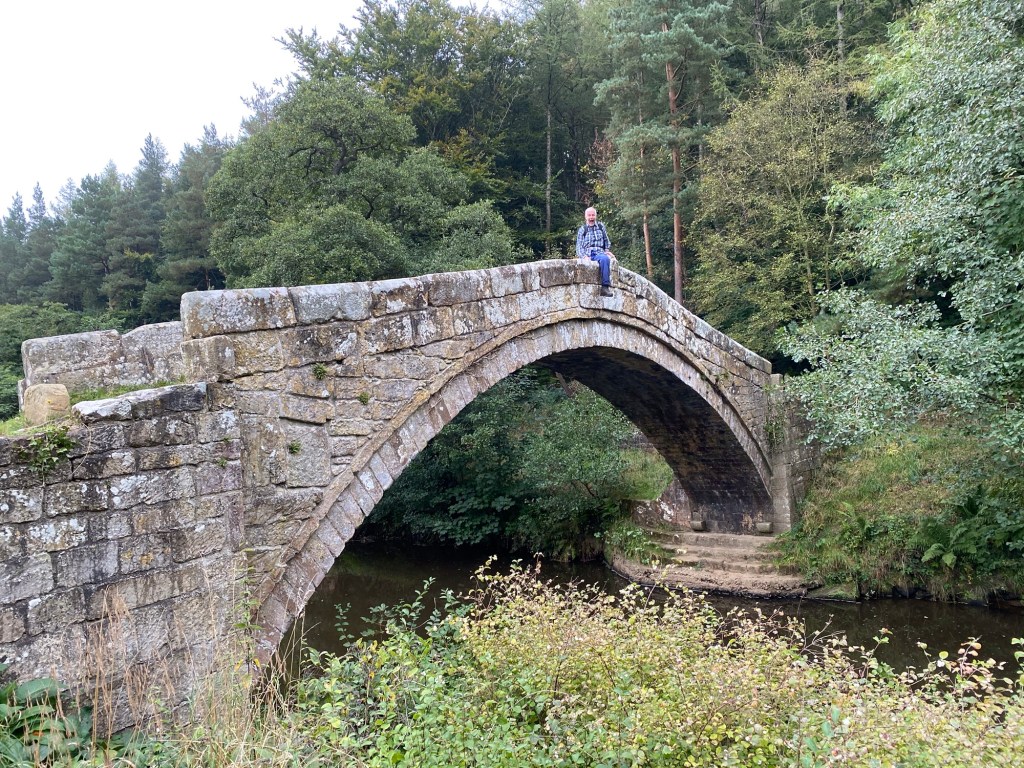
It was a very scenic walk down to Egton Bridge, starting with the Beggar’s Bridge just outside Glaisdale which has a very fanciful story attached to it that you can look up at your leisure.

Beggar’s Bridge, Glaisdale

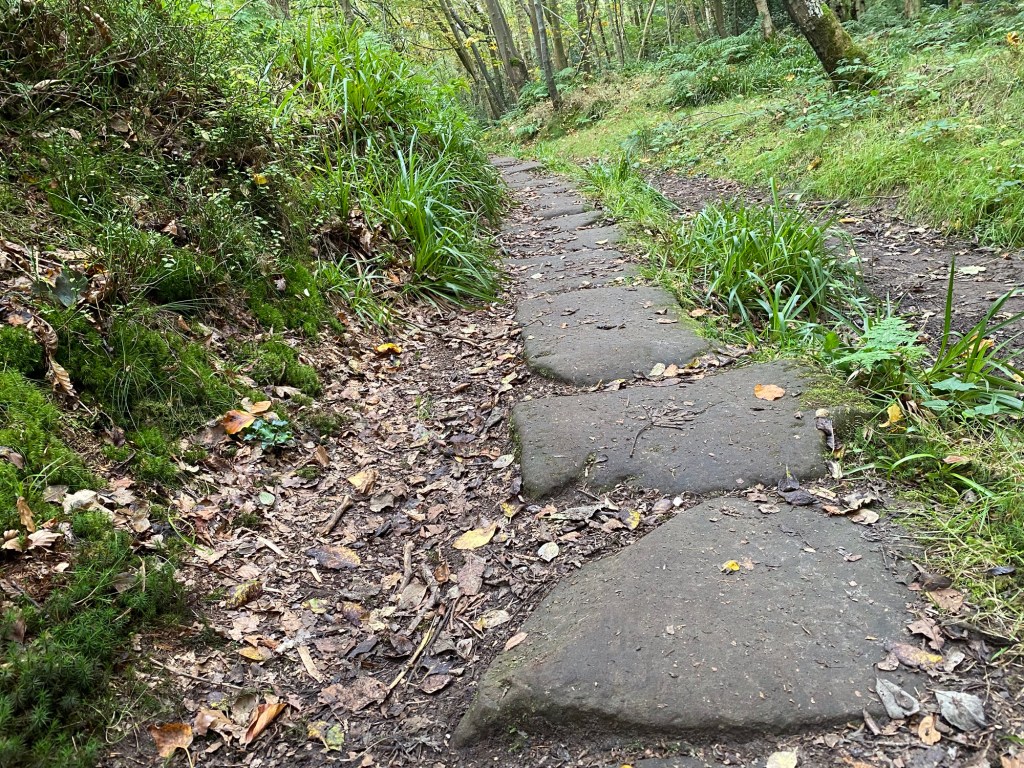
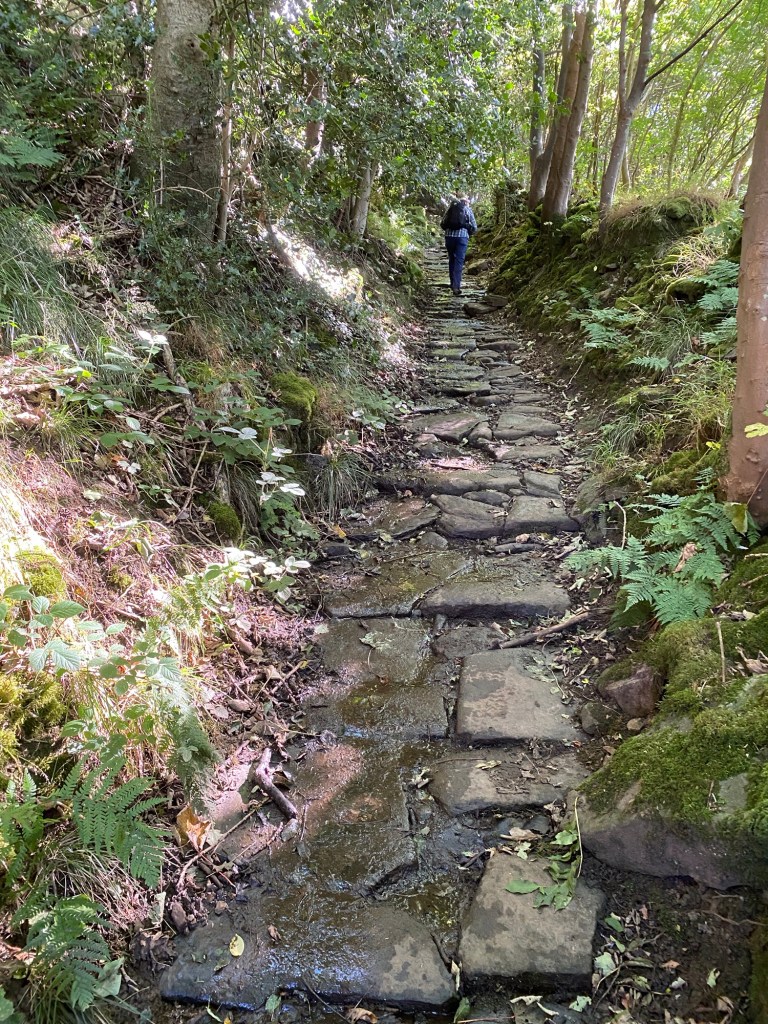
After that was a tranquil wooded walk on what seemed to be ancient stepping stones, some of them quite concave with what I’m hoping has been centuries of woodland wanderers.

Footpath stones

I was surprised to reach today’s destination – the Horseshoe Inn – at around 3:30pm after only nineteen kilometres and still feeling very fresh. The Horseshoe seems to be pleasantly eccentric, with a random assortment of eating rooms, an impressive collection of taxidermy, and staircases all over the place.

I hope we sleep well, because tomorrow looks huge. Almost thirty kilometres, with rumours of a big climb, moors, bog, and a final sea cliff walk to mirror the one we started with to take us to journey’s end. Not sure when I’ll get a chance to blog about it, because we have a date with our American friends to drink beer at the Wainwright bar after dipping our filthy boots in the North Sea and disposing of the pebble we picked up at St Bees (one of them, we took one each to keep as well that has travelled in our daypacks). You’ll hear about it at some point, never fear.

Day 17: Chop Gate to Blakey Ridge

I’m afraid you’re not going to get a lot of photos of today’s walk. We did have a grassy and heathery climb out of Chop Gate, farewelling Wolfgang and his dreams of being back in Australia. It was about five kilometres winding gently up the hills through moors before we rejoined the Coast to Coast – Chop Gate is down the valley from the track. You can have a mossy wall for atmosphere.
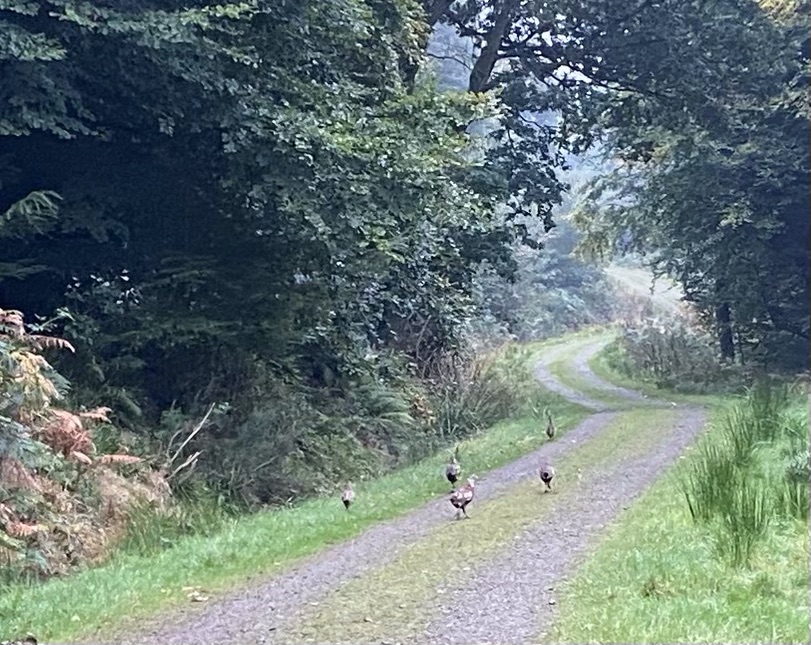
Something I really wasn’t able to photograph was walking through a grouse hunt. We’d almost got used to walking past a thick chunk of heather and having a startled grouse leap out of it and fly heavily away, clucking like a broken mechanical toy. So when we walked past a chap clad in matching green flat hat, waistcoat and knickerbockers, holding a walkie talkie and a giant orange flag, accompanied by two wet spaniels – we had our suspicions. I couldn’t quite work out what the mechanics were – some of the green clad chaps had yellow flags and there was some kind of signalling going on. But as we made our way up to the ridge, we heard the shooting start. It was very innocuous sounding shooting, like someone tapping on a metal tea tray. I’m sure they had their methods of not shooting walkers.

Snug little area for hiding from grouse before shooting them

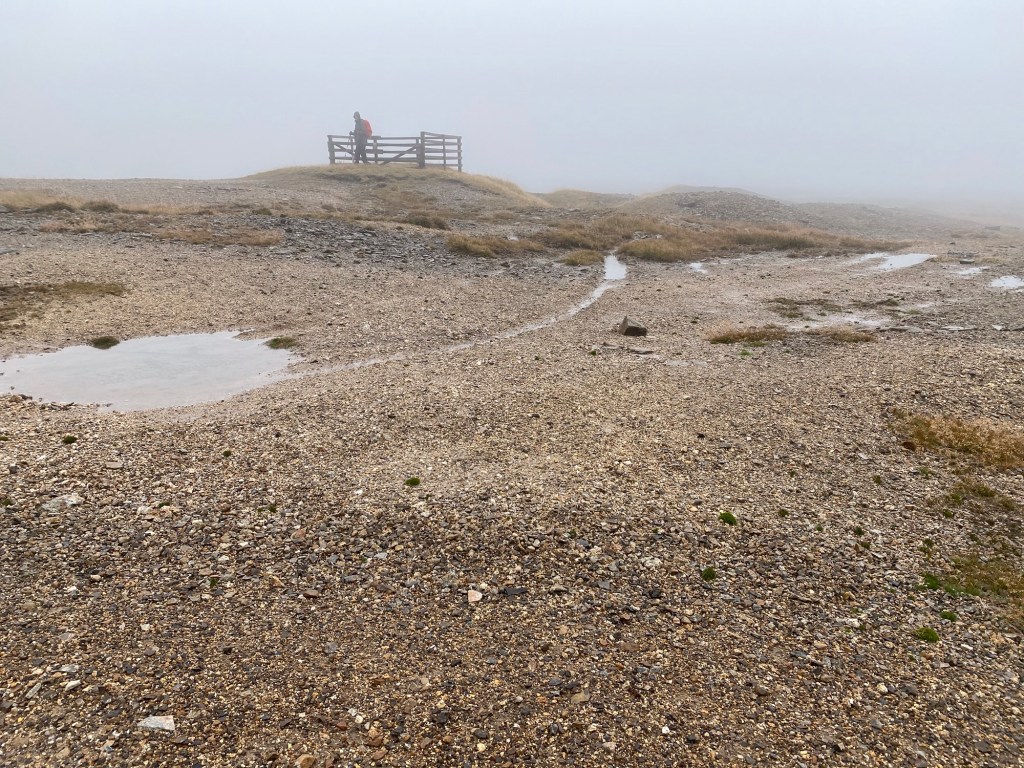
The Coast to Coast today, once we got onto it, was massively non challenging. Wainwright like it because of the views, and because he admired the engineering of the old iron mine railway track that we mostly walked along today for following a contour very closely. Views would have made it a delightful walk, but we didn’t have any. Occasionally the mist would lift for a quick teasing peek down into the valley, but would then roll back over us. I think what we were experiencing was wuthering. The wind wasn’t blowing us off our feet, but there was enough of it for my watch to occasionally issue a reprimand. That plus the swirling mist did have me expecting Heathcliff to stride past on his way to dig up his dead love.

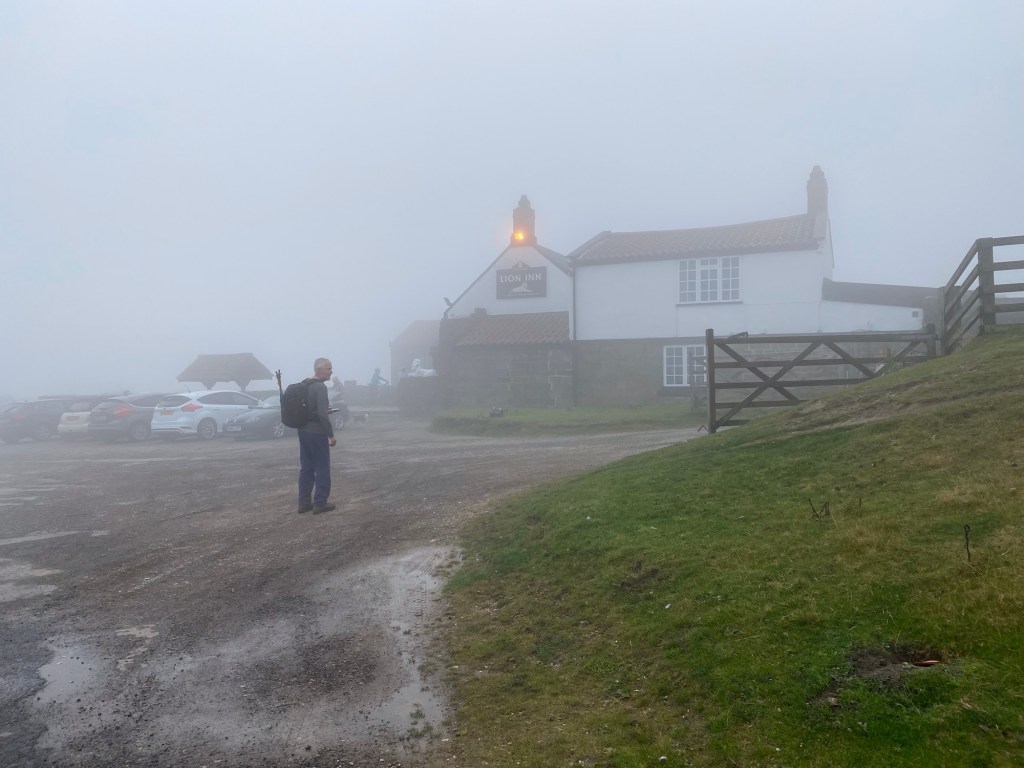
That did mean, however, that instead of being able to sight our accommodation – the Lion Inn – from kilometres away perched on a hillside we only sighted it from about twenty metres out.

The Lion Inn

Inside it was a storybook medieval inn. Mind your head signs on every lintel. Heaving with a mix of day trippers who’ve driven up, hikers, cyclists and dogs. And a fine collection of open fires – we were rather in need of thawing out after our nineteen kilometre day in the fog and wind.

I think we’ll have a very comfortable evening here. I might buy one of their T-shirts.

Day 16: Ingolby Cross to Chop Gate

I had myself all psyched up for a difficult day of climbing in the North Yorkshire moors, and I don’t know if I’m just fitter now, if it was the path, or if it was the company, but it was a delightful day.

We left the very comfortable Park House and its flocks of pheasants and did not start on the Coast to Coast track that runs past the front gate because we’d gone that way yesterday on our sneaky route to Mount Grace Priory.

Instead we turned left to find a path that went up the hill through the forest and immediately ran into our American friends. They were doing the conventional route, but had seen enough of the Commander to understand why we were deviating. It turned out to be an excellent path, and a dog walking woman we met on it told us that up until a month ago it had been a muddy nightmare, but they’d fixed it up just for us. And by the time we regained the offical Coast to Coast track, there were our American friends again.

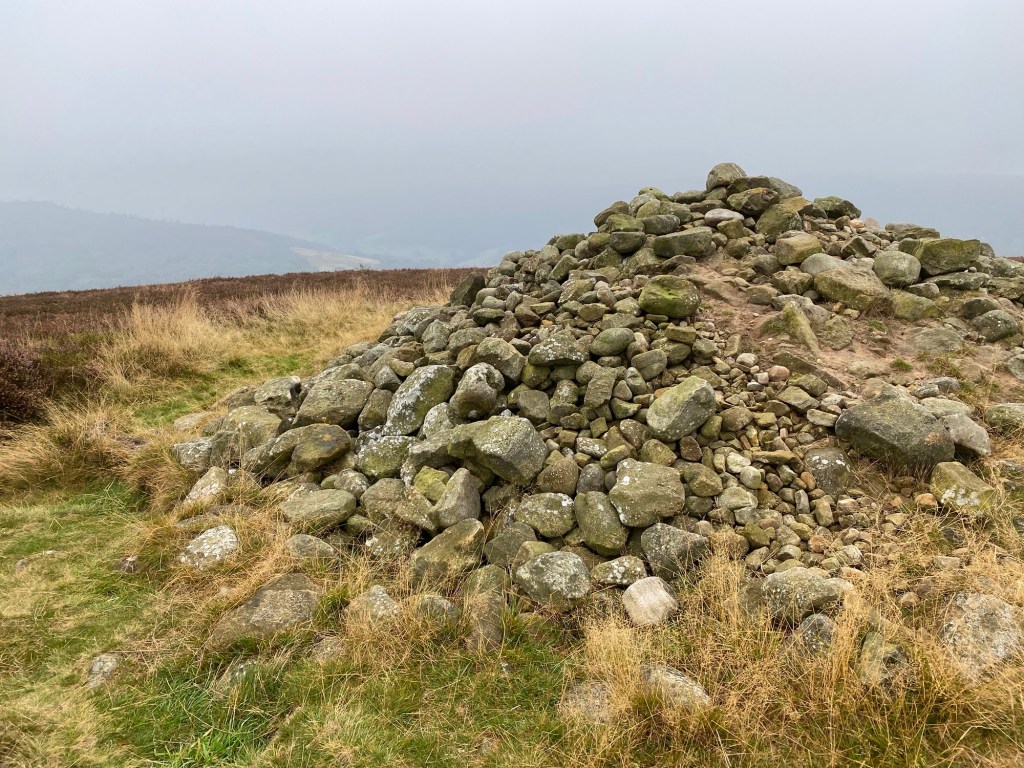
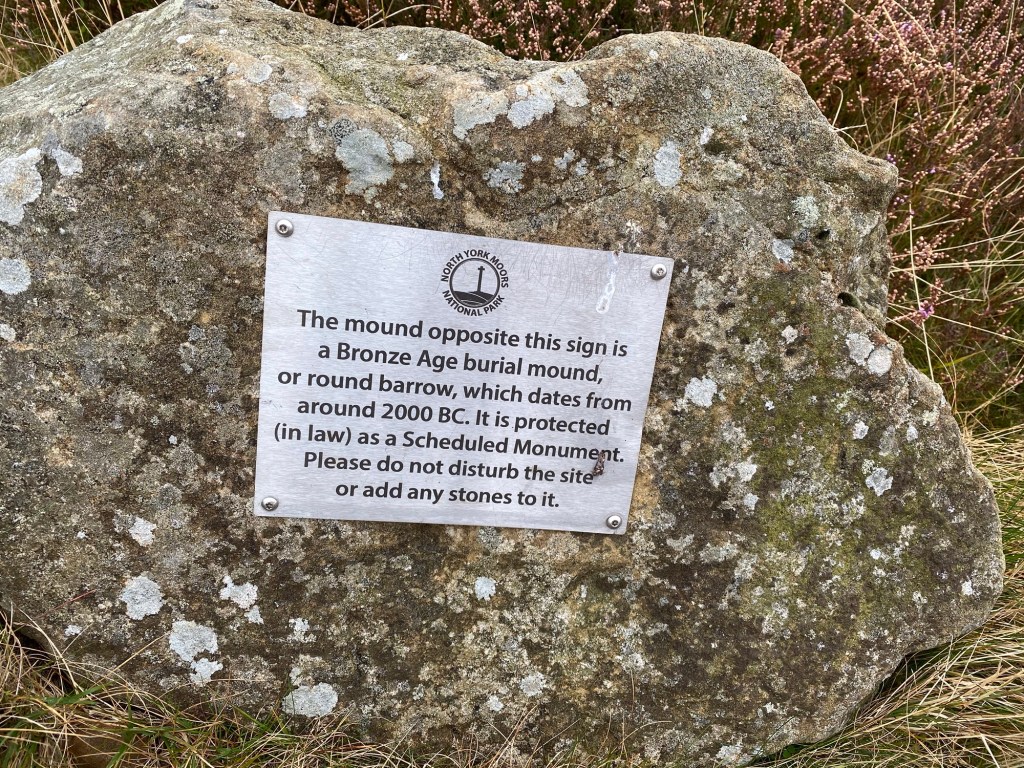
What we’re walking on today is actually the Cleveland Way. As a long established walking route, it is paved almost all the way we walked today with flagstones, making the whole lot much easier to negotiate. I do wonder if eventually the Coast to Coast will be similarly paved and we’ll look back and say we did it when it was difficult and scoff at the young uns. It did start out with a long climb, up into a cloud which stayed with us pretty much the whole day. The very first cairn on the track when we reached the high moor was not much to look at, but a small plaque indicated that it was a Bronze Age burial mound.

I’ve decided that mist is better than wind or rain, but it did mean that the next stop was as much view as we ended up getting.

The Americans had a date with a taxi at 3, they have not been as fortunate with their accommodation bookings as we have. So we made a good pace, and having a bit of excellent company on the track made a lovely change. We’d heard a rumour of a cafe on the track, which seemed very unlikely on the wild treeless moor, but sure enough around noon we descended a little into a sheltered valley with a very solid cafe and shop where we were able to obtain espresso coffee and toilets.

The track continued excellent, even with its ups and downs, but the fog increased.

The last climb took us to the Wain Stones, very mysterious in the mist. That’s where we bid farewell to the Americans and started to make our way off the path and down the valley to Chop Gate.

We’re staying at a pub run by a chap called Wolfgang, which means Bavarian beer (yay!) and schnitzel for dinner. The Commander is currently trying to persuade him to light the fire which, given the weather, seems a pretty reasonable request. He’s being fobbed off by Wolfgang’s tales of his adventures in Australia and how sad he is to be instead living instead in England because he married an English woman. We shall see how this battle of wills plays out. At least we managed to get him to turn on the hot water. I should really have been keeping a record of the intricate shower mechanisms we’ve encountered along our way, but this is the first one we’ve seen that is centrally operated from next to the bar.

Only three days left of walking, and very little climbing! I really think I’m going to make it. I don’t think I’ll wear the Coast to Coast T-shirt we bought at Frith Lodge until maybe the last day, or even on the train back to London. Don’t want to jinx it.

Day 15: Danby Wiske to Ingolby Cross

Hands down easiest day walking. And we knew it would be, so we lingered in our magazine perfect not B&B until the host came and raised his eyebrows at us. Then we put on the boots and visited the Norman church, because apparently every village in these parts has one.

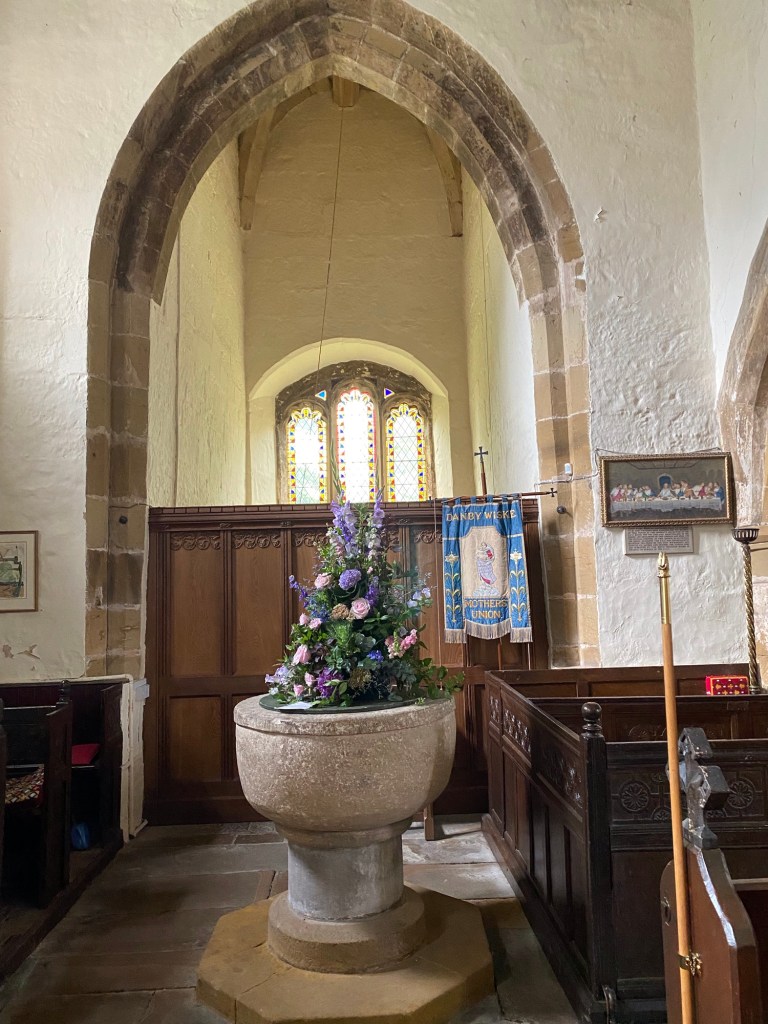
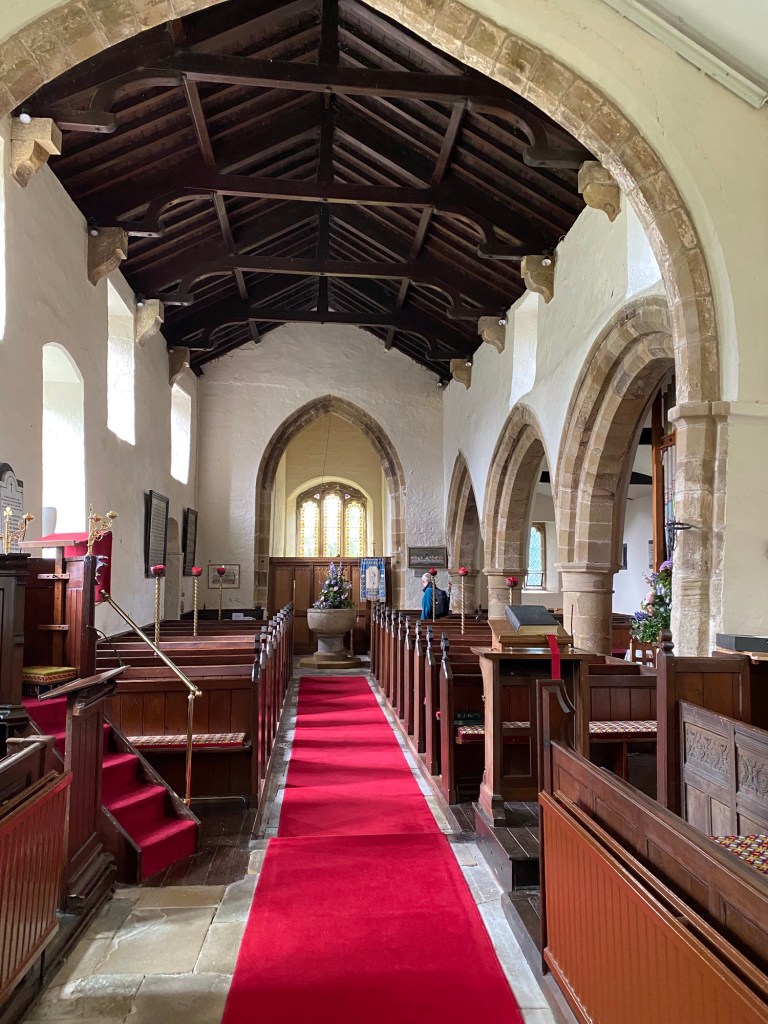
They’re all different, and they’ve also all had different things saved from the depredations of the Reformation. This one had its baptismal font and possibly one of the doors, and also the main structure and it was as delightful as they all have been. I can’t get enough of them.

The actual walking today felt like a bit of a rest today. Wainwright didn’t like this bit and yesterday, no views, no climbing, too much walking on the road. He has a point, but tomorrow will have a lot of climbing and I’m pleased to be injury free and feeling physically and mentally rested for it. There was also a lot of walking around fields, we’ve moved into cropping fields after the endless sheep and they don’t like you walking through them for some reason. When Wainwright was first mapping out and walking the route in this area he found that a lot of the public right-of-ways were neglected, obstructed, covered over. Being Wainwright he kept meticulous notes on the lot and sent reports to all of the local councils, who ended up opening them all back up again. We did get one Bull in Field sign, but apart from that it was smooth walking.

So not much to report in the way of countryside. Because the route was so flat and short we ended up in Ingolby Cross close to 2pm. The local pub wasn’t open, our accommodation wasn’t accepting check ins until 4pm. We had some refreshment at a local cafe, but needed something to occupy ourselves for a couple of hours. We decided to go for a walk.
There is a ruined priory in this area, but the way by car is back out the way we came and along the freeway for quite some time. What we did instead was to sneak along some forestry roads congested with pheasants on the hillside we’re going to start climbing tomorrow, climb over a couple of fences and get in the back way. I can’t tell you how much I love an ecclesiastical ruin. Mount Grace Priory was the home of some Carthusian monks back in the 1300s and 1400s, and, again, abandoned at the time of the Reformation. These dudes took a vow of silence and got shut into their cells where they wrote, spun, wove, did a spot of gardening, prayed – obviously. As the Commander said, so that’s what the autistic people got to do back in the day. I think he’s onto something.

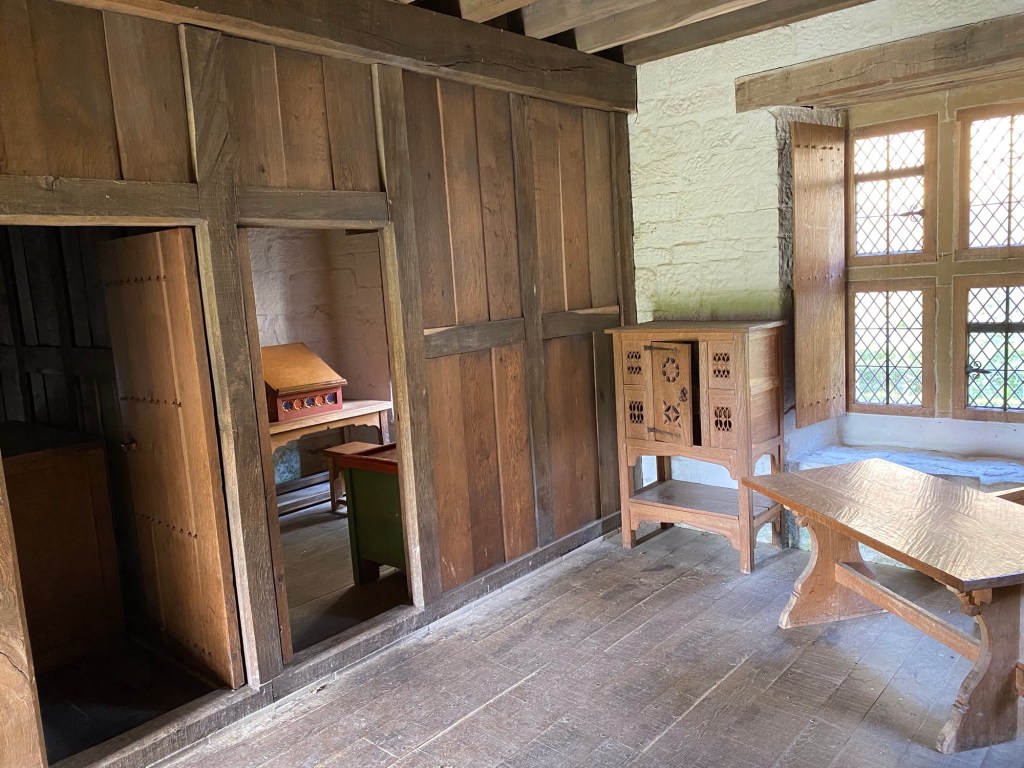
Some lord at some time got hold of the place and rebuilt bits of it and at some point one of the monk’s cells was recreated as it would have been and it was marvellous. I get the leave it untouched idea, but there is so much of this, having a little section recreated gives you a very vivid picture of the original use of the place. The priory covered a big area, and the outlines of the walls are all there, as are bits of some interior walls, including the cell doors and the square holes that the food got pushed into so that the monk inside wouldn’t accidentally see anybody.

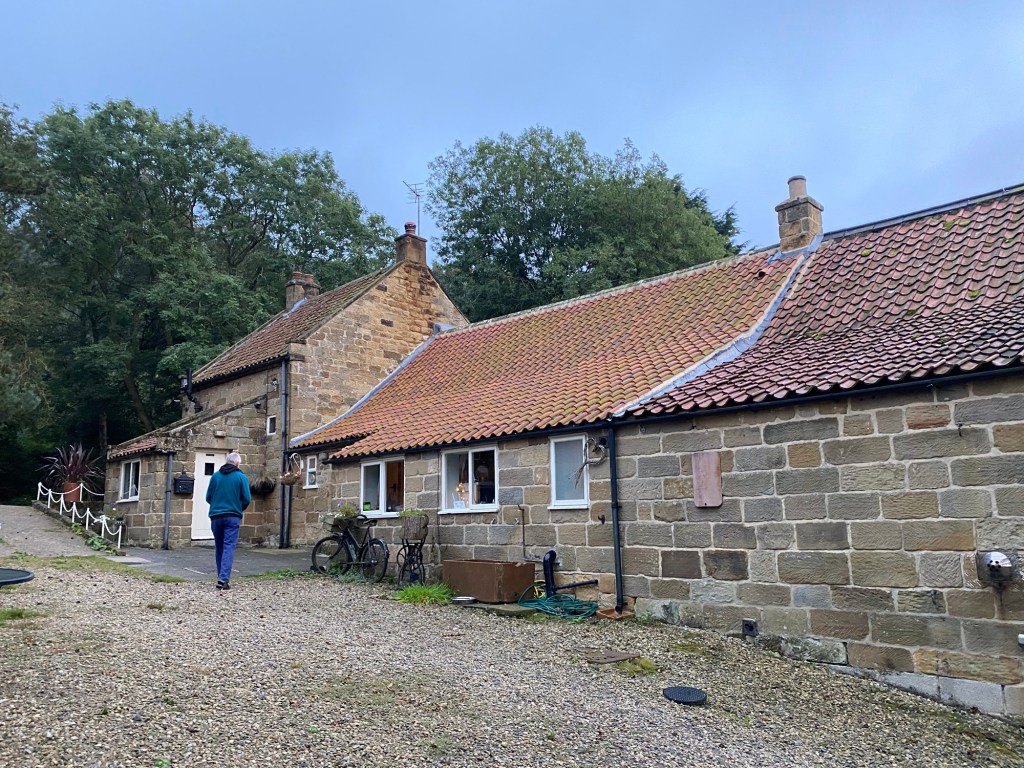
So we scrambled back out the back way, sneaked down some different forestry tracks still congested with pheasants and arrived at the Park House Country Guest House. I had to email them a few days ago to reassure them that we’d be eating here and didn’t have any allergies because Brett is an ex chef and would be cooking our dinner tonight, and it melted in the mouth. I have really loved the variety of places we’ve stayed at. This is a stone walled jumble of possibly ex farm buildings nestled in the foothills of the Cleveland Hills that we’ll be climbing tomorrow, and it’s just delightful.

It will be interesting to see how we cope with tomorrow’s climbing now that we’re all trained up. Stay tuned.

Day 14: Richmond to Danby Wiske

We had the table on an angle this morning in our historic B&B, but it did not detract from our enjoyment of our breakfast. The breakfasts have been outstanding on the trip, I’m going to have to work hard at convincing my stomach to go back down to a couple of pieces of toast and Vegemite when we finish this. The Commander has been having full English plus porridge, at Richmond I was having cereal and yoghurt plus smoked salmon on toast. The coffee has been pretty uniformly filter though, which gets the job done but is not delicious.

Heading out of Richmond we stopped into the old railway station which has a bit of a mix of things going on in it, a cinema, a dance studio, a microbrewery, an art gallery, one of those shops with soaps and silver jewellery and blankets in it. Most of the floor space was given over to a cafe though, and that’s where we got a much better coffee. It was a Wednesday morning and the place was jumping, full of mothers groups, older ladies having just finished some form of exercise class, older gentleman in flat hats shooting the breeze. Delightful.

Tearing ourselves away, for we had a bit of a distance to cover though, as Wainwright disdainfully noted, no chance of climbing anything today. We headed along the peat coloured Swale for ages.

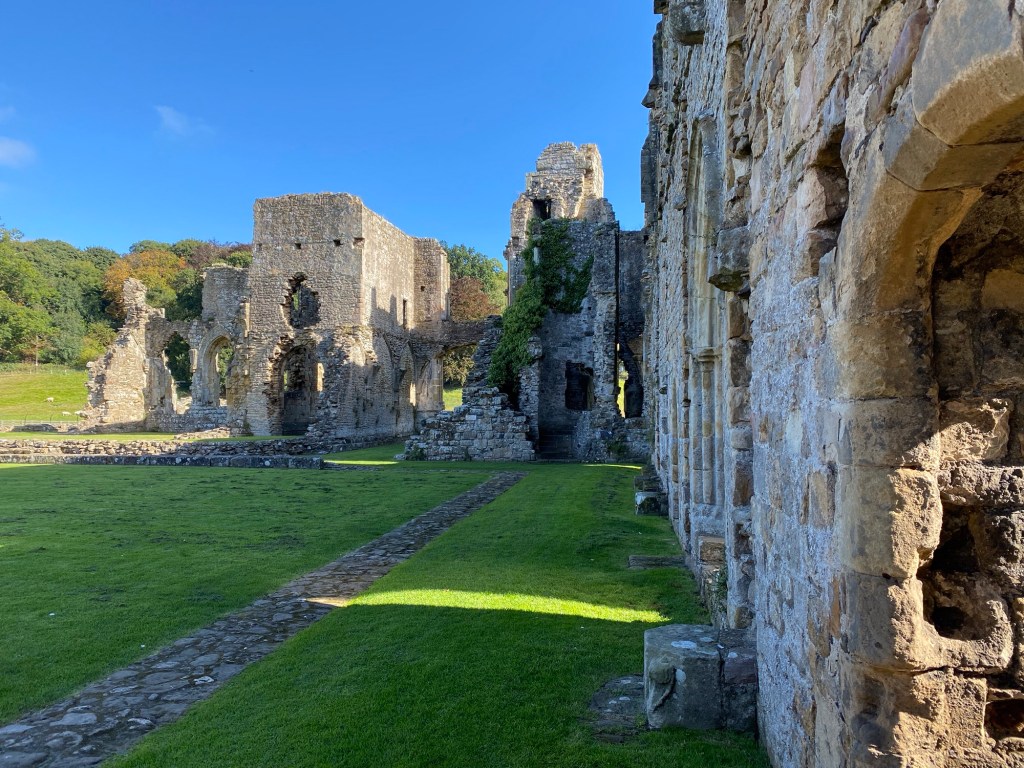
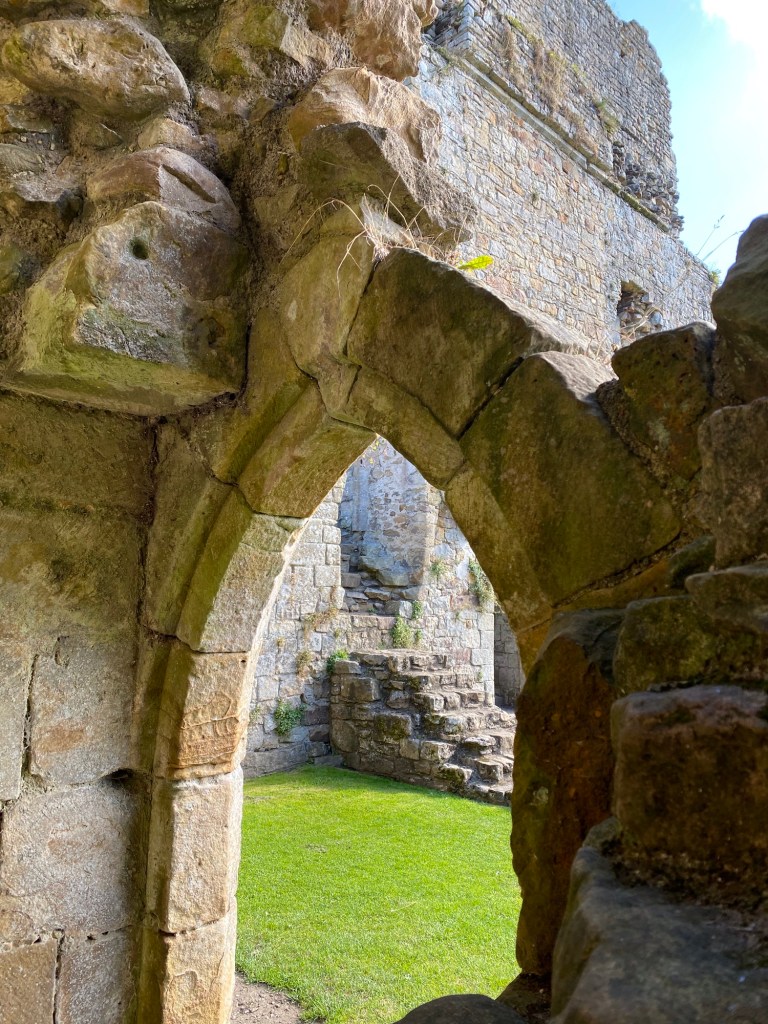
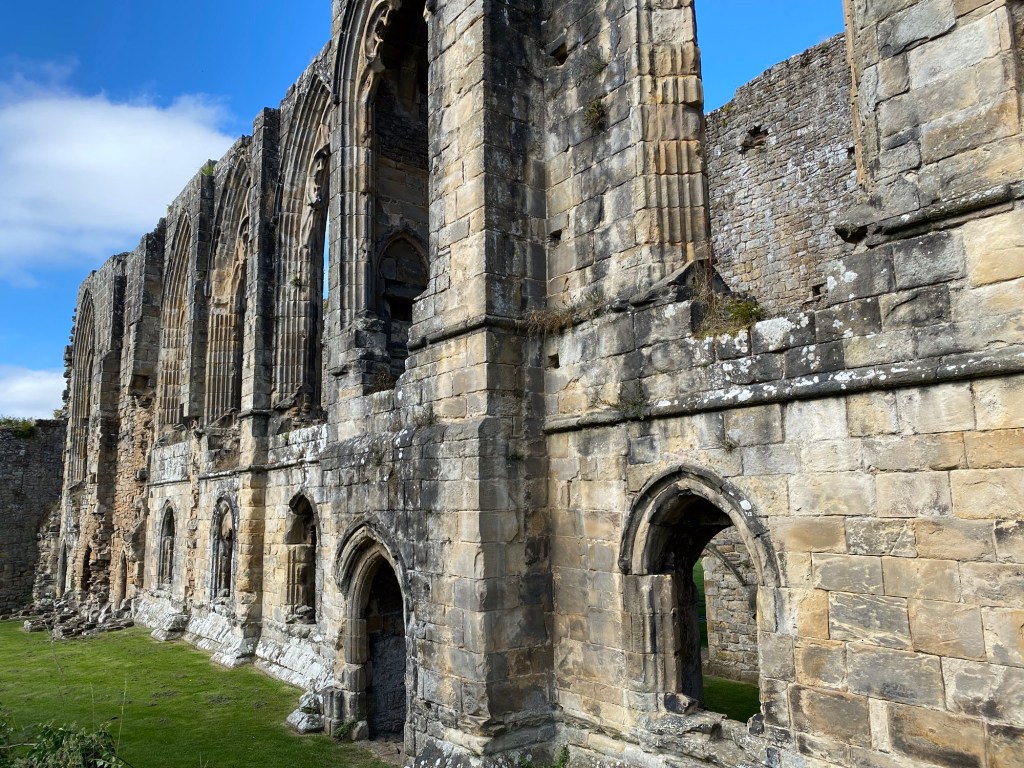
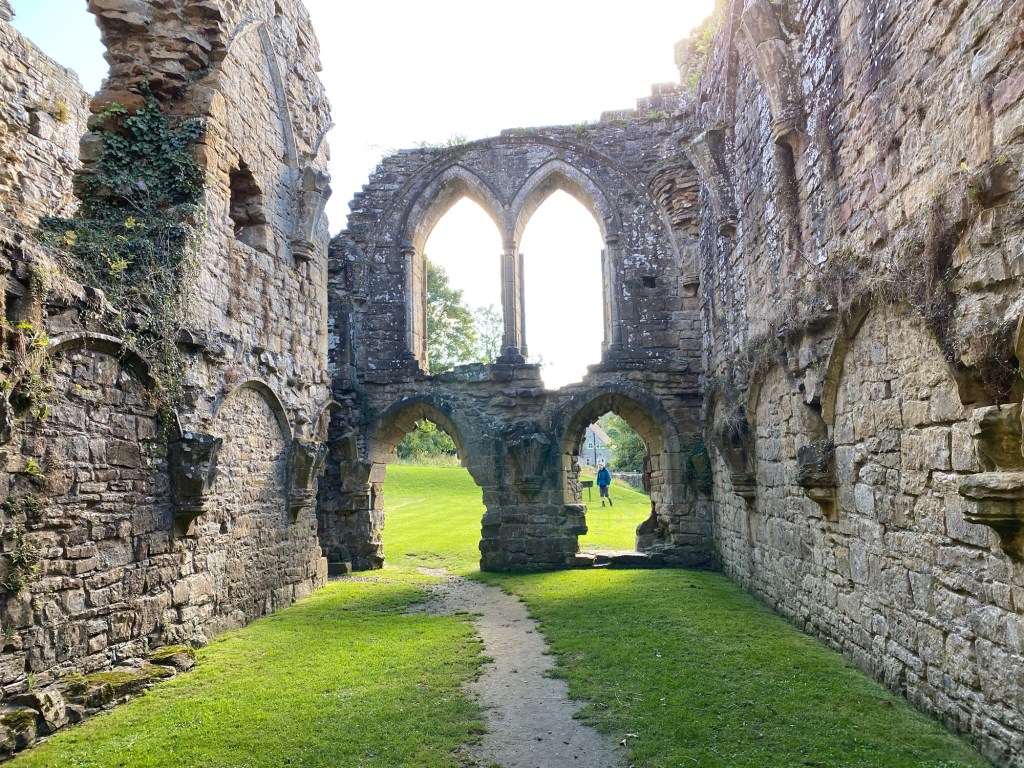
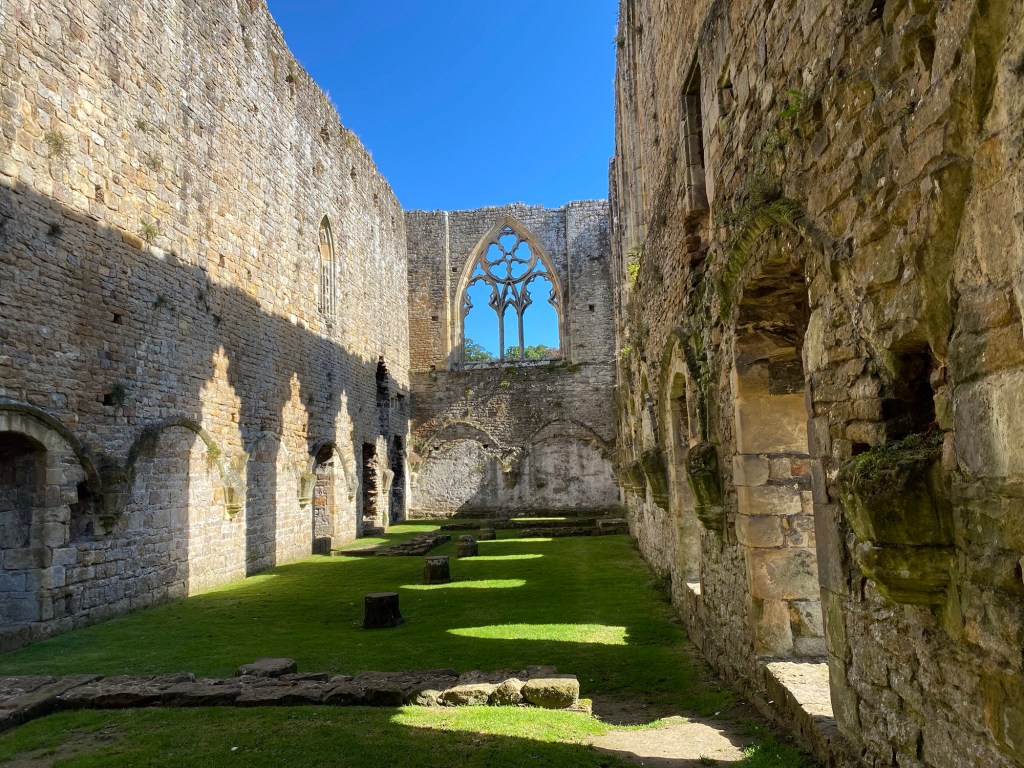
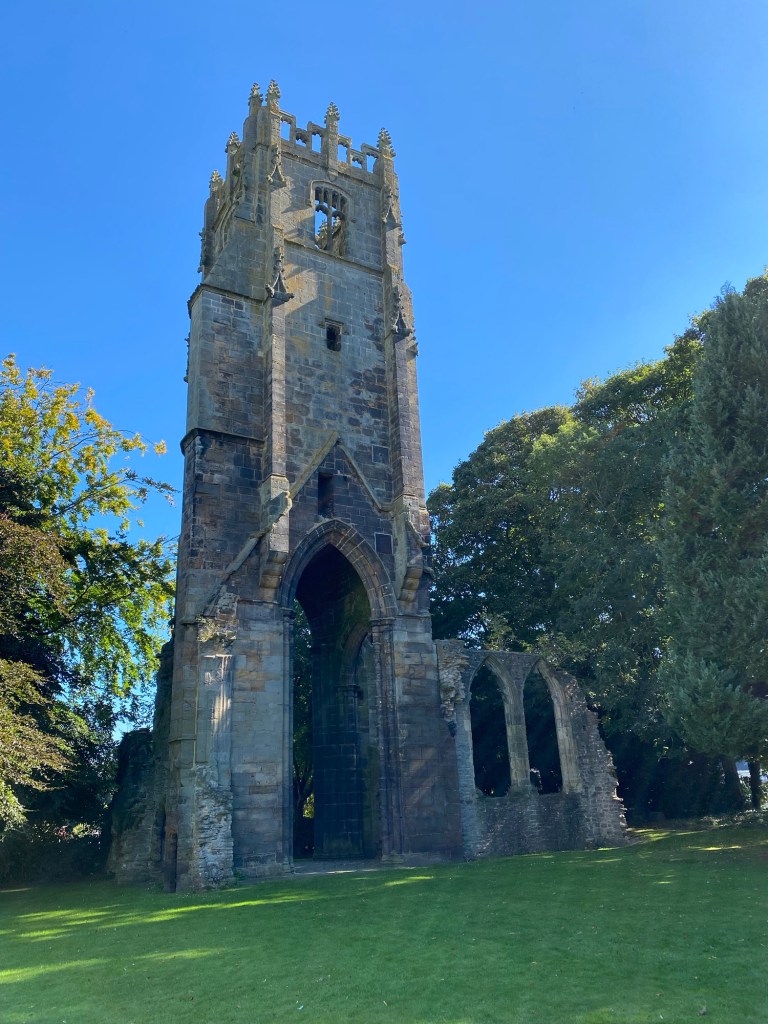
We did take a half accidental detour to the magnificent ruins of Easby Abbey. We saw it in the distance, and were magnetically attracted to it, realising it was going to add some kilometres but it was so worth it. It looked like it must have been a big community, it provided religious succour to the inhabitants of the castle at Richmond and surrounds. There’s a lot of the outline left, and we had a lot of trouble not spending the entire morning there.

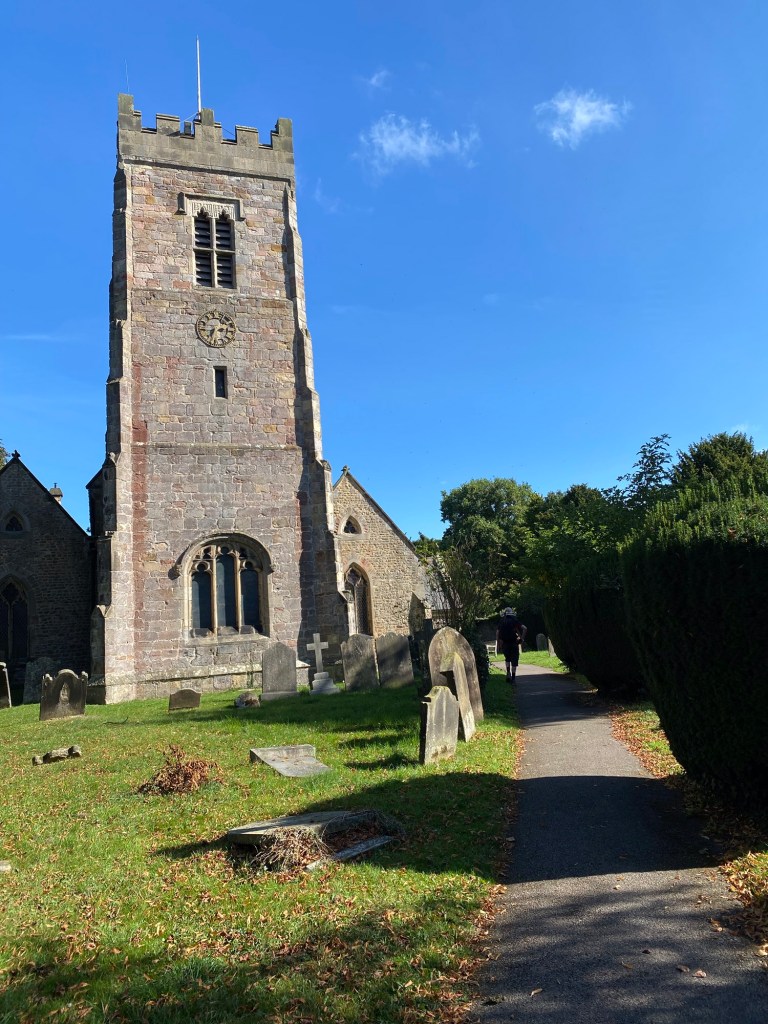
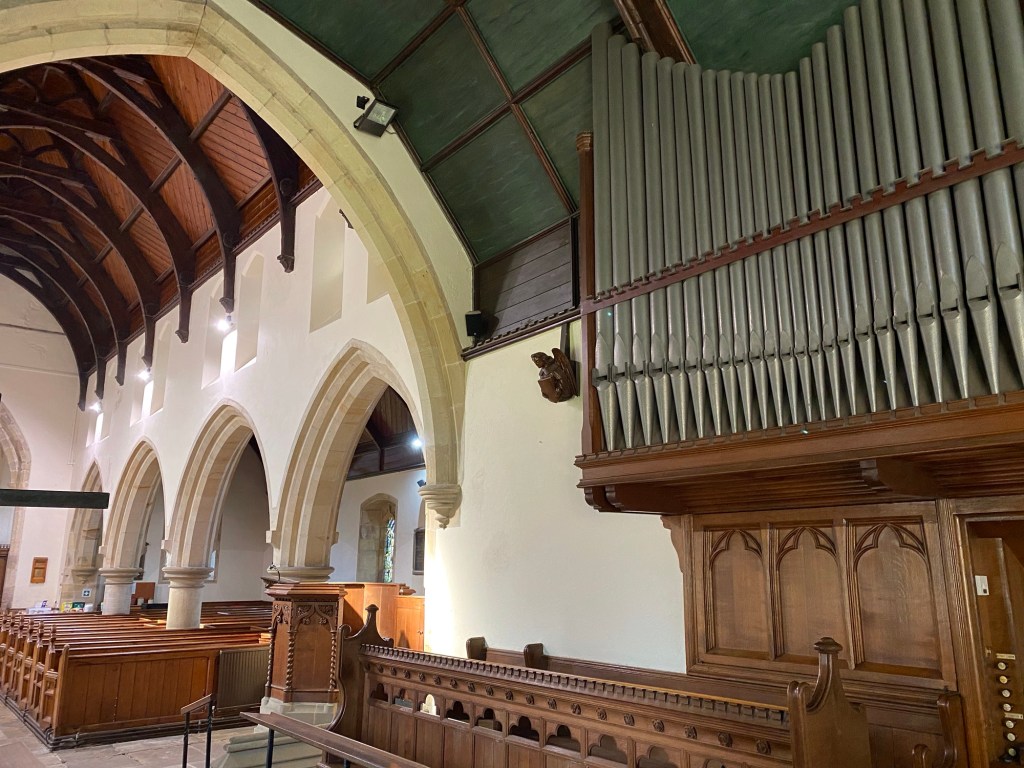
The adjoining church of St Agatha is still in operation, and there’s something very beguiling about the idea of worshipping in an edifice that had adherents in its very pews a thousand years ago.

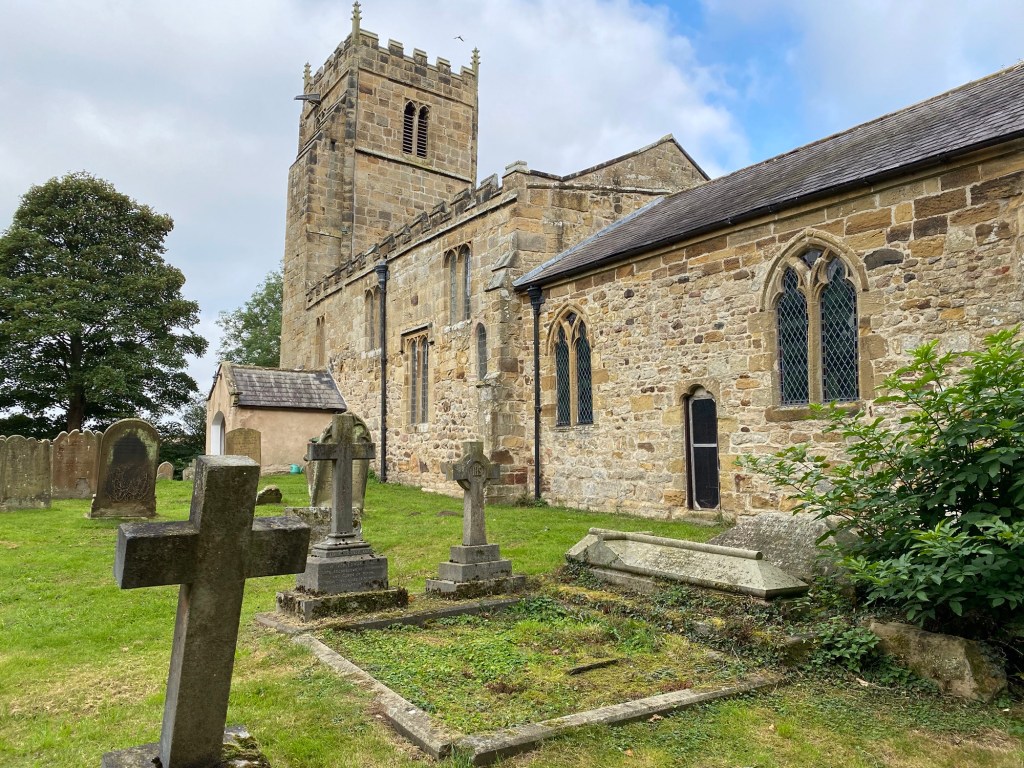
Adding to the church theme, it seems most villages in these parts have a Norman church, like St Mary’s at Bolton-on-Swale and they are all different. Some have rediscovered paintwork in them that has been lovingly restored by local artists, this one had paintwork done by a nineteenth century single lady ‘in the style of’ which I won’t bore you with. It also had enclosed pews, and a monument to an allegedly 169 year old man.

The rest of the day was fairly bucolic, passing through some fields but mainly tiny country roads which are a bit tedious to describe, a tiny bit monotonous to walk for a long time which we did today, and a bit hard on the feet. Anyway, here are some of our bucolic photos.

There was a little bit of walking through fields using public right-of-way paths. We have noticed that not all farmers are particularly happy about this. Some have just been a bit passive aggressive, putting up signs like ‘Bull in field’, corralling walkers into a narrow track between a barbed wire fence and a stream, putting up electric fences, that kind of thing. But today we had someone set the dogs on us. Well, just didn’t stop them slipping under the fence and running in circles around us barking their heads off. Admittedly they were a Labrador and some kind of terrier, but if you were scared of dogs it would be pretty intimidating.

The stop for tonight is Danby Wiske, a town so small that Coast to Coast walkers who cannot be accommodated at the White Swan are billeted in the houses of locals. We’re with Anne and I didn’t catch her partner’s name, in a very comfortable bedroom a stone’s throw from the pub. There is a town WhatsApp group, and they find out how many walkers are staying and that many tables get booked at the pub. When you drag yourselves into town after walking 25 kilometres, you must first present yourself at the pub and tell Steve what you want for dinner. If you foolishly first present yourself at Anne’s house, she allows you to change out of your boots and then shoos you down to the pub, because don’t start me on Steve.

When you re-arrive at the pub for dinner, you sit down at 6:30 and wait your turn. I had a superb chicken pie which was too much for me, and the Commander had an equally toothsome steak pie. The pub meals have been really excellent and usually feature local produce. Again, have been eating about three times as much as I normally would and will have to go onto some kind of salad regime once I return home.

Resting in Richmond

Hooray for a rest day in what felt like the bustling metropolis of Richmond. Comparatively. We thought we’d hit all the top tourist sites in the town and discovered, consulting Google Maps, that they were all within approximately 200 metres of our bed and breakfast.

First up was the Georgian Theatre Royal, the oldest theatre still operating as a theatre in England. They couldn’t say continuously operating because it had a breather from being a theatre for a bit over one hundred years. There’s a one hour tour and it was brilliant. It was built by Samuel Butler (not the author) in 1788 to take advantage of new laws not requiring player troupes to get written permission from London to put on plays anywhere in England, and to give something for race goers and militia stationed here to do. It currently seats around 150 theatregoers, but they used to pack in hundreds more on wooden benches. I won’t go into the whole history, you can look that up, but it was very lucky to have the stalls preserved and is in terrific condition today.

Then it was into the Richmondshire Museum, one of those marvellous community run museums that houses an eclectic mix of stuff of local interest, stuff that the British Museum couldn’t be bothered with, contents of shops from a hundred years ago, and in this case part of the set of the movie version of All Creatures Great and Small., complete with stuffed dog.

Consulting room from All Creatures Great and Small

Walking around the Friary Gardens took up the best part of ten minutes, but there is a chunk of Friary not pillaged by the local villagers upon the Reformation to inspire a little bit of awe.

The Friary

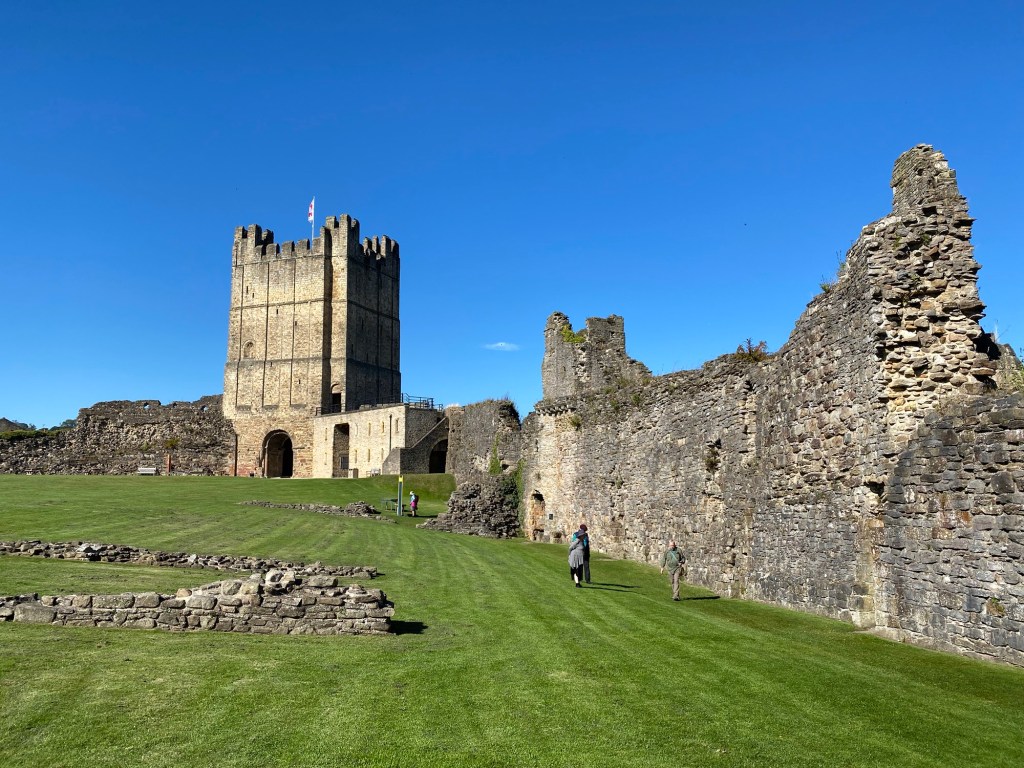
But the big feature of Richmond is its Norman castle. It’s going to be the only proper castle on the route, so we had a lovely explore of it.

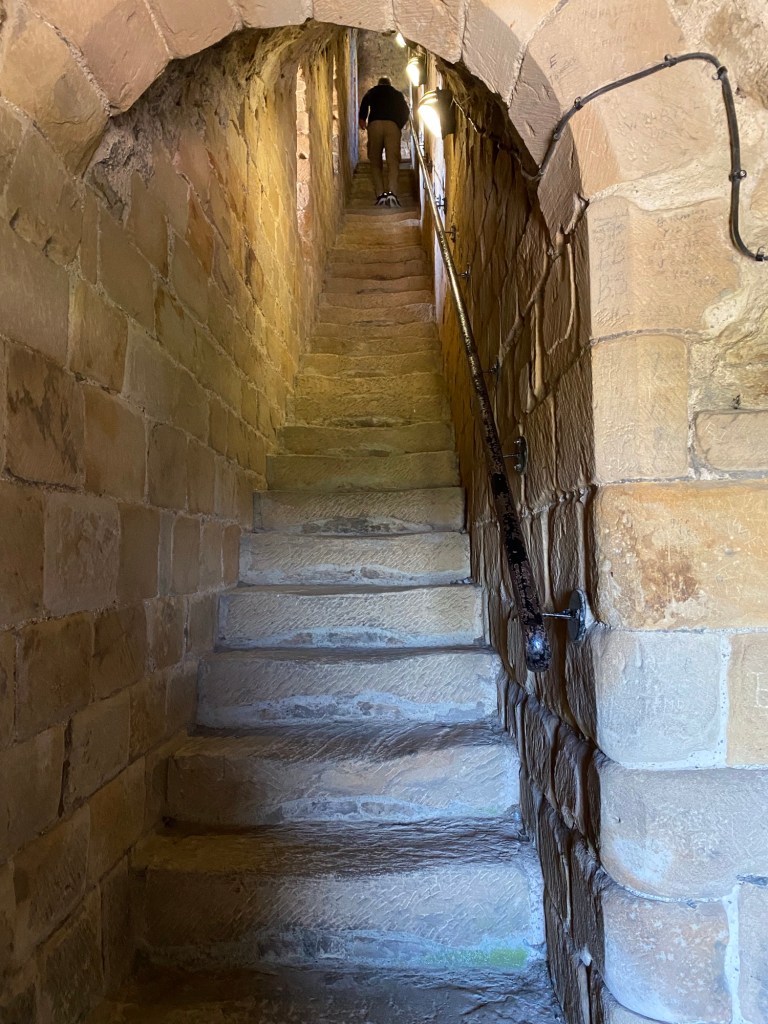
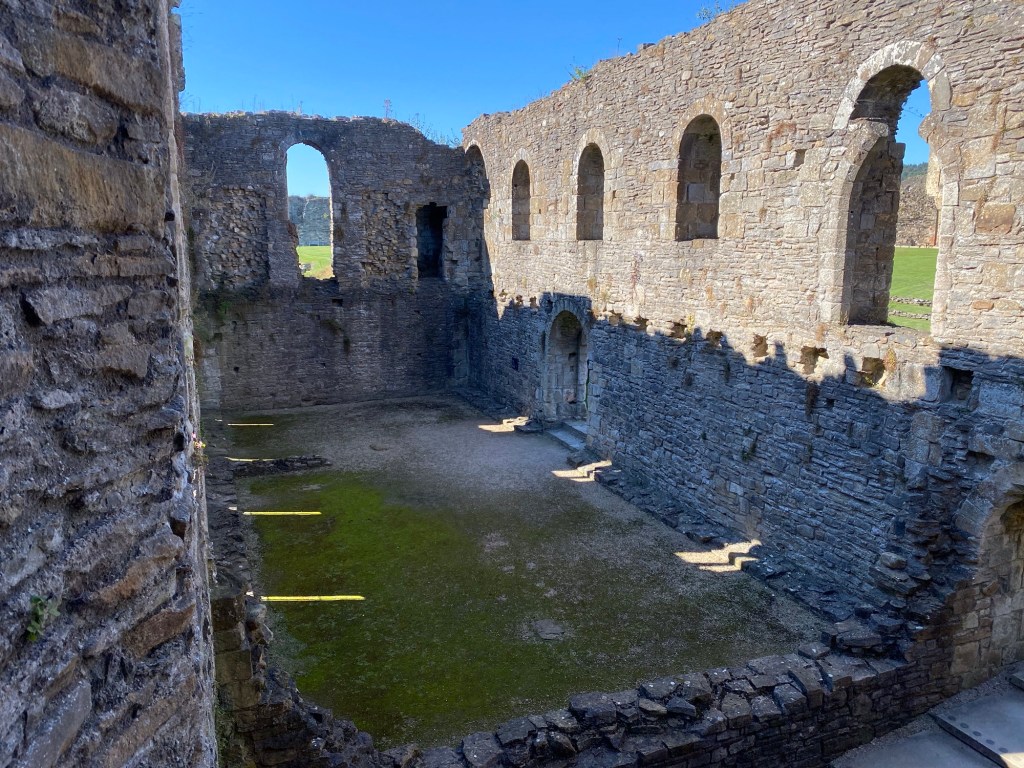
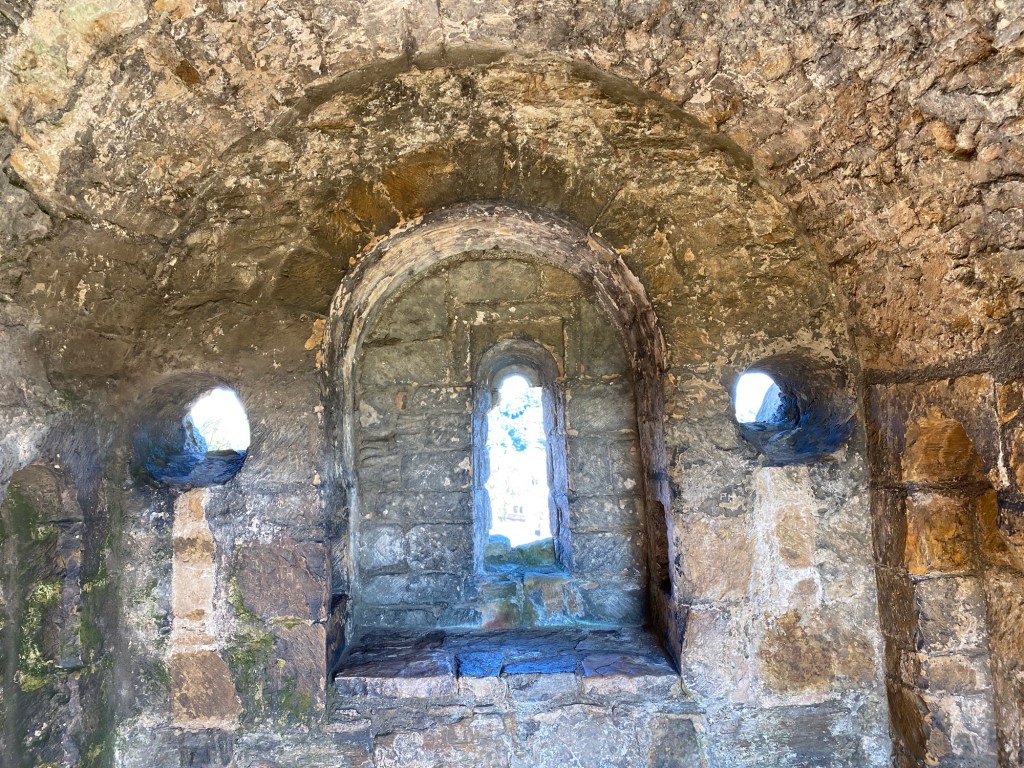
Bits of it have slipped down the cliff into the River Swale beneath, but most of the outline is still there, as is the tower with an unphotographable spiral staircase, bits of the great hall, wall latrines and other fun stuff. The Commander had a lovely time at the top of the tower mapping out the superb view of the surrounding landscape, where we’d been, where we were going. I found our B&B.

View from Richmond Castle tower, red arrow indicating our B&B

After that the Commander was keen for the local military museum, but I gave it a miss and left him to it. I thought I’d look at some touristy shops, but for some reason there aren’t any. There’s a pie shop selling a bewildering variety of pork pies, but I’ve never understood the appeal of them (yes, I’ve tried one). There were a couple of little shops selling soaps and candles and cushion covers and such like. There were a surprising number of charity shops. So I came back to the B&B to rest the joints, pick up our laundry (our hosts did it for us for an extremely reasonable fee), and get ready for dinner with some American doctors from Oregon we keep bumping into. We overheard some people at breakfast complaining about the lack of any horizontal lines in this place, their bed had been on a bit of a slope. They asked our host how old the house was, and they hadn’t the faintest. I like it, but then our bed is luckily level. It did make me notice that our door isn’t, though, this isn’t a quirky camera angle, it has been taken straight on. The door jamb has been built to suit the current angles on the house.

Jaunty angle on the door jamb

It’s one of the things I’ve loved about this trip, all of the visible history around us in these villages that the locals kind of take for granted. I’m sure if I lived in one of these places I could write the novel of the century.

Day 12: Reeth to Richmond

Today was the kind of day someone who hadn’t done any research into or training for the Coast to Coast walk might imagine the whole thing is like. If you haven’t read the rest of the series, go have a look.

It dawned sunny and bright as we popped into the village shop at Reeth to stock up on Kendal Mint Cake. I’m going to have to bring about three kilos of it home with me, aren’t I.

Reeth village square

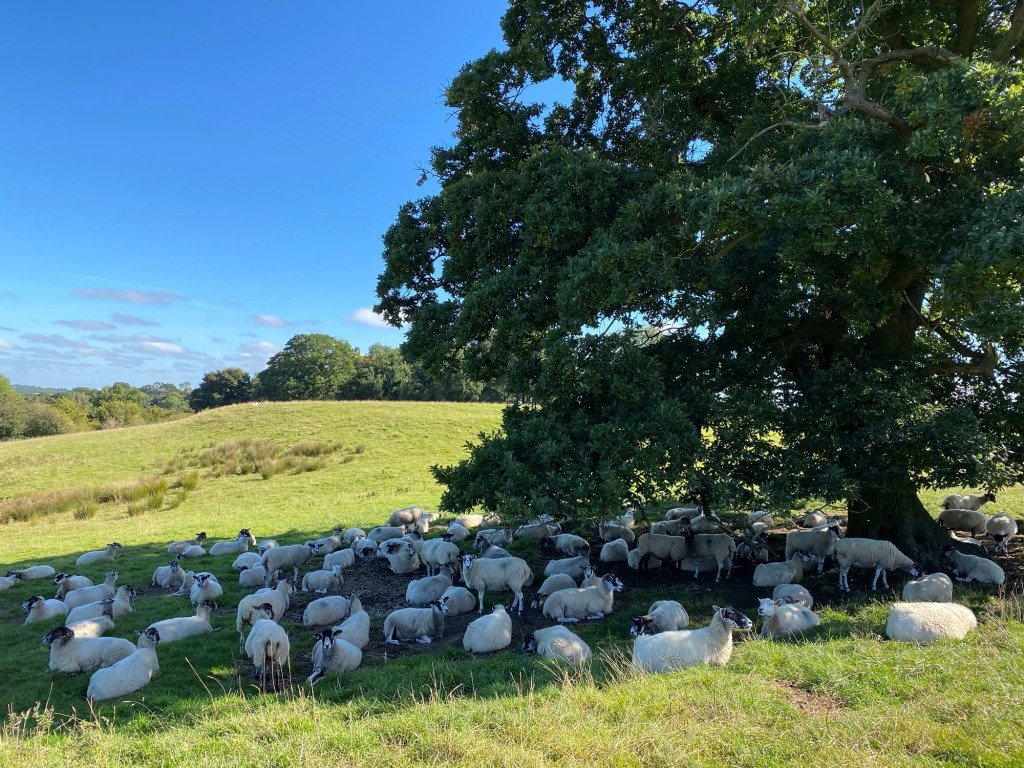
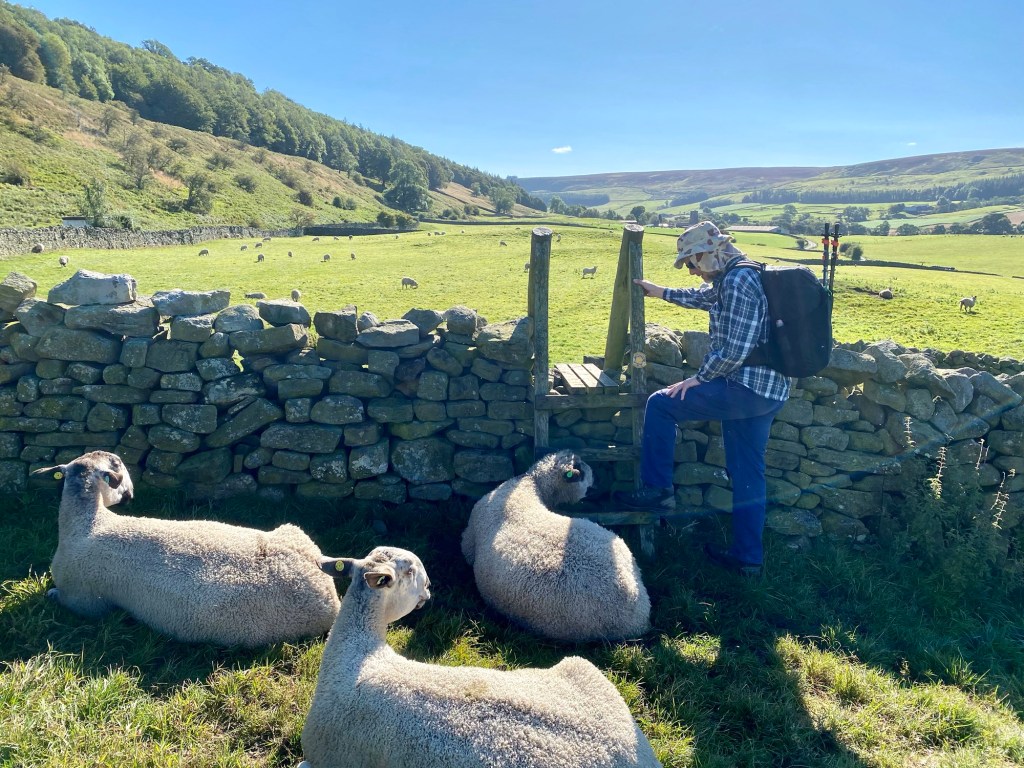
We walked down the road, past lovely little stone cottages to where the River Swale bubbled its peaty brown way over the rocks and continued beside it under shady trees for a while. We then turned off and started to climb over farm land, but quite gently. The grass was dry, the sheep were chill, the series of gates well signposted.

Sheep not bothering to move as the Commander climbs over a stile

We passed Marrick Priory, which is pretty well preserved and is currently being used as an outdoor recreation residential facility, whatever that means, and isn’t open for visiting. But we could climb the Nun’s Steps behind the priory, winding their way up the hill towards more farmland.

Nun’s steps behind Marrick Priory

The Commander had heard a rumour about a farm near the track serving tea to walkers. We had been disappointed before, but this time we hit the jackpot. Elaine saw us coming, welcomed us in, showed us the toilets and had a cream tea (that’s what a Devonshire tea is called in England we’ve discovered through trial and error) in front of the Commander and a slice of apple pie in front of me in the sunny garden before you could say aren’t you worried about the cat attacking that chicken.

Cream tea at Elaine’s farm

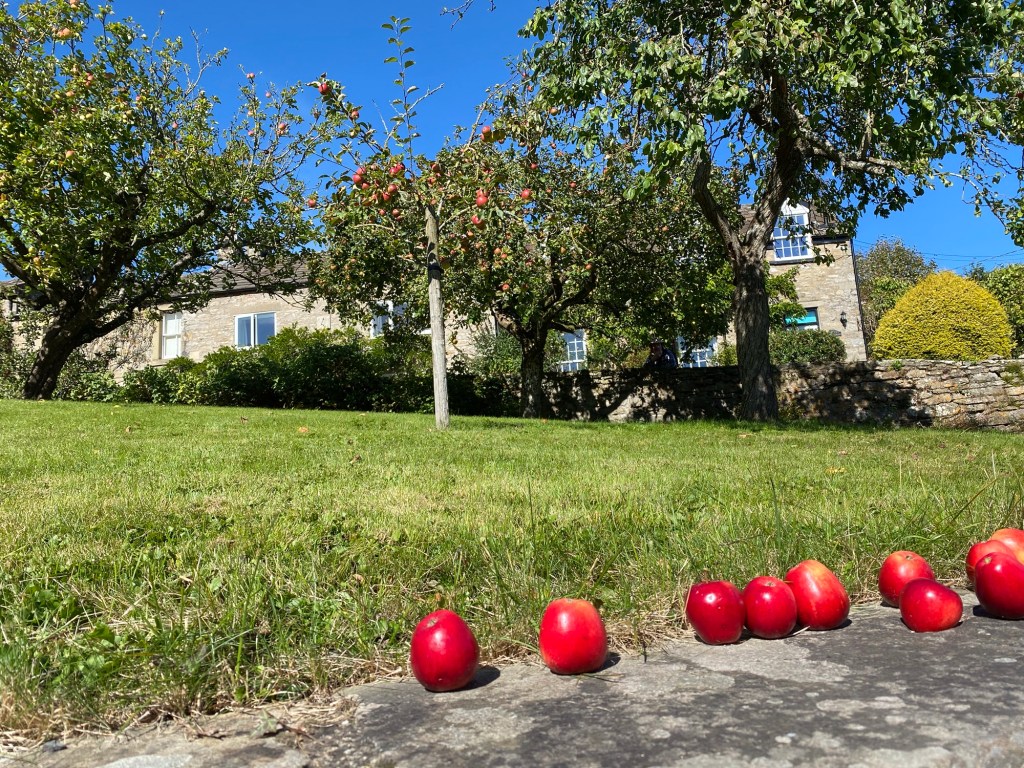
Elaine had herself done the Coast to Coast some years ago and was in complete sympathy with us about the lack of cream teas along the way. I was unable to tempt out the feral kittens under the bushes, so, fuelled up, we were on our way across more picture book farmland. Almost the only villages we had seen on our walk so far were the ones we spent the night in, but further along our track we walked into Marske. Marske not only had a Hall (privately owned), an ancient church with enclosed pews – something I’ve only ever read about, but further up the street was a front yard full of apple trees, with surplus fruit sitting on the front fence for hungry travellers and they were juicy and delicious.

Apples fresh from the tree

It did end up being an eighteen kilometre walk today, but mostly on surfaces kind to feet, very little in the way of steep climbs (there are never going to be none), and we could see Richmond Castle from quite a way off. Our destination was The Castle Luxury B&B so it was an easy landmark to aim for.

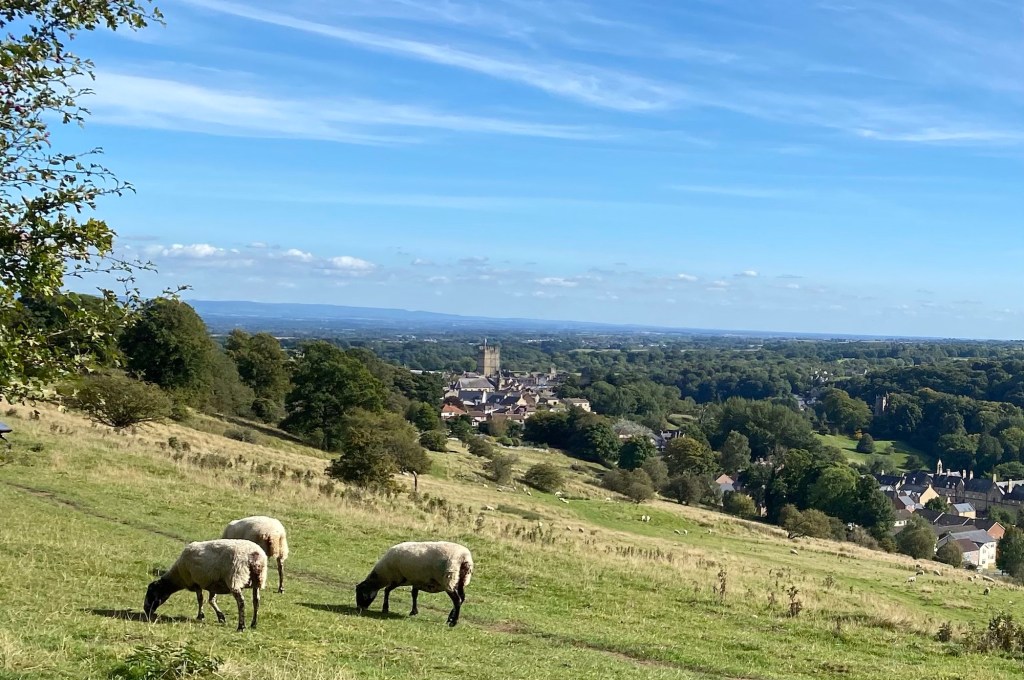
Richmond Castle in the distance

The Castle Luxury B&B is very nice, and they did give us a complimentary beer on arrival and will be washing our clothes for us tomorrow, but we’ve got a bit fussy since Frith Lodge. There is a lot of French Provincial furniture about the place, a giant bath and a comfortable sitting room. But if you’ve got the word Luxury in your title, you are setting up expectations. I’m sure we’ll be very comfortable here for TWO nights because my joints are saying hallelujah we’re having a rest day tomorrow.

Day 11: Keld to Reeth

It was very hard to leave Frith Lodge. They had been so hospitable, the bed was so comfortable, the home cooked breakfast outstanding. Also, it was raining. But we’re walking across England, and that’s not going to happen by enjoying being inside. So raincoats and rain pants on and we were off onto the Pennine Way which crossed Frith Lodge’s driveway, on our way back to the Coast to Coast walk.
View of Frith Lodge from the Pennine Way

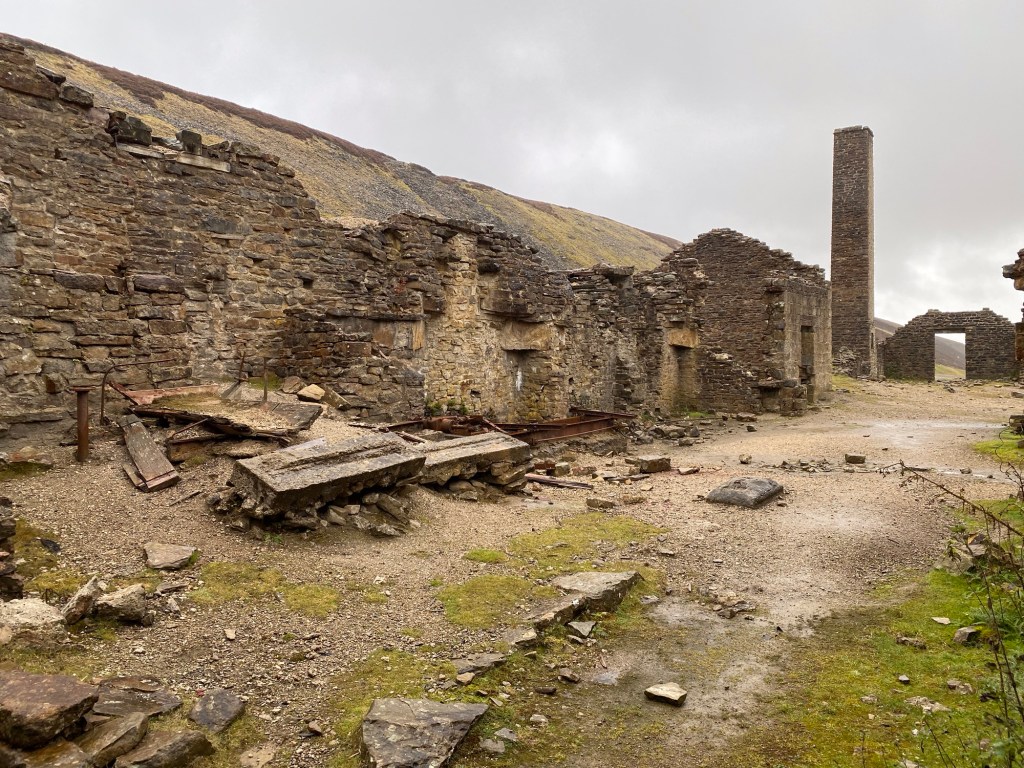
It was a day of up hills and down dales. As was often the case there was a high track and a low track option, so obviously we went with the high one which did entail more climbing. But this meant that we got to explore quite a bit of the local area’s (Swaledale) lead mining history. The first ruined building was Crackpot Hall, which seems to have started off life as a farmhouse some hundreds of years ago, got converted into a hunting lodge, then ended up as an office building for the lead mine before lead mine subsidence resulted in it being abandoned as a bit of irony for you.

Crackpot Hall, Swaledale

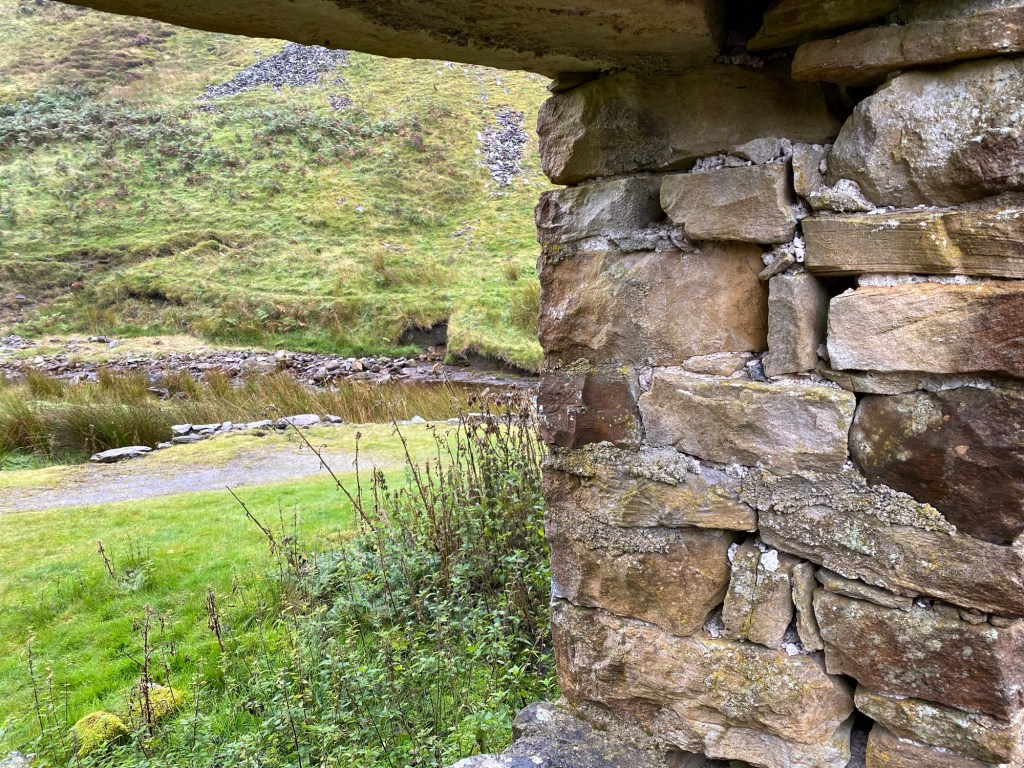
The track passed a lot of crumbling bits of lead mine infrastructure, bits of bridges, corners of buildings. Some areas would have made a lovely spot for a picnic if it wasn’t windy and raining.

Ruined lead mine buildings

It was all rather picturesque for quite some time until we got up on top of the ridge to see a fairly desolate landscape that hasn’t recovered, even though mining here was abandoned early in the twentieth century. A TV program we saw with Wainwright walking this area had him actually sounding a bit nostalgic for the industry and thriving communities it supported, even as the presenter walking with him gently reminded him of the child labour and enormous mortality rates of the adult workers in the mines.

Lead mining area, with capped shaft in the mist

Even with all this, I did find the ruins very poignant.

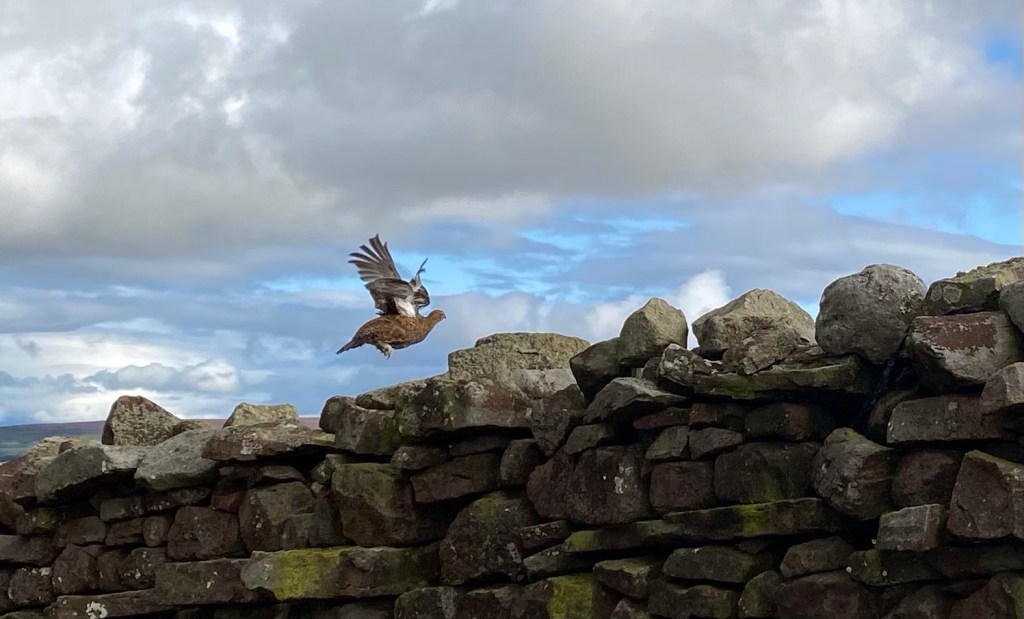
The other fascinating thing about today’s walk was the grouse. As in, the bird. I’d seen a bird identification poster at Frith Lodge, so I was fairly sure that the awkward looking thing rising out of the heather in front of us making a sound like Mr Krabs laughing was actually a grouse. And I can’t understand why people hunt them for sport. I’ve never seen a bird fly so slowly, I’m fairly sure I could have taken it down with my trekking pole. I’d understand why you’d want to eat them, they look like they have a good amount of meat on them. We ended up seeing lots of them on the moors as we walked along, and they are quite hilarious.

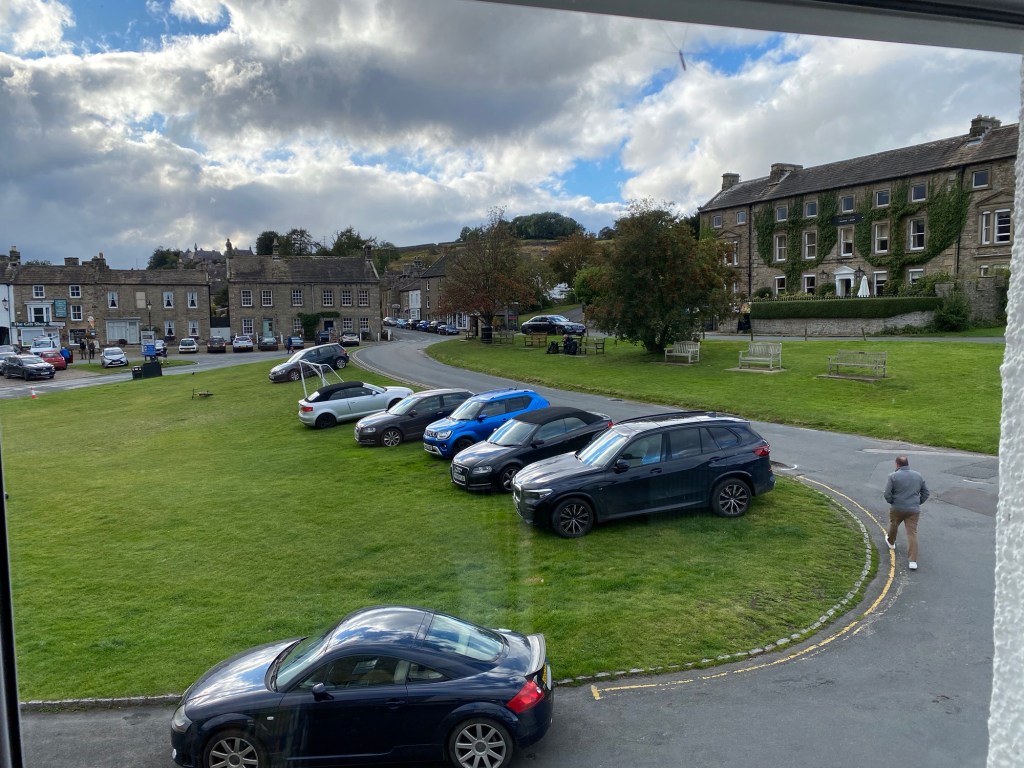
Descending from the moors (and then unexpectedly re-ascending and descending a few more times) we gradually made our way into Reeth. We’d heard it had a celebrated village green, and our B&B was actually on the green. It turns out that a village green, for those that don’t know, is a patch of grass kind of in the open, possibly with kids kicking a ball on it. Bit underwhelming, could do with a coffee van.

Reeth village green, from our B&B window

But it was good to get out of the wet coat, wet pants, wet boots and wet socks, pull off the ankle strapping, divest myself of the knee brace, have a hot shower and get on to the pub on the other side of the green for dinner. Does every village have a Black Bull pub?

Interior of Black Bull pub, Reeth, with giant fireplace